Creating a calm environment for your dog often starts with the right tools. According to recent behavioral studies, dogs that engage in regular sniffing and foraging activities show significantly lower cortisol levels than those left with passive entertainment. This data shows that mental stimulation is not just a luxury but a biological necessity for emotional regulation. When a dog is stressed, their ability to process environmental cues drops, making traditional play less effective. By introducing homemade enrichment, you provide a safe outlet for their energy. This guide walks you through creating effective, low-cost toys that align with the philosophy of CalmPaws & Home.
Understanding Canine Enrichment
Before diving into construction, it is vital to understand what enrichment actually does. Enrichment is the practice of providing stimuli that allow animals to express natural behaviors. For dogs, this means sniffing, chewing, and foraging. When a dog is stressed, their nervous system is in a state of high alert. Passive toys do not engage the brain enough to lower this arousal.
Research indicates that a twenty-minute sniffing session can tire a dog more than an hour of brisk walking. This is because sniffing activates the parasympathetic nervous system, which promotes relaxation. At The CalmPaws Journal, we emphasize that slowing down is key to helping your dog adjust to new environments or stressful events. By making your own toys, you can tailor the difficulty to your dog's specific needs.
The Snuffle Mat Tutorial
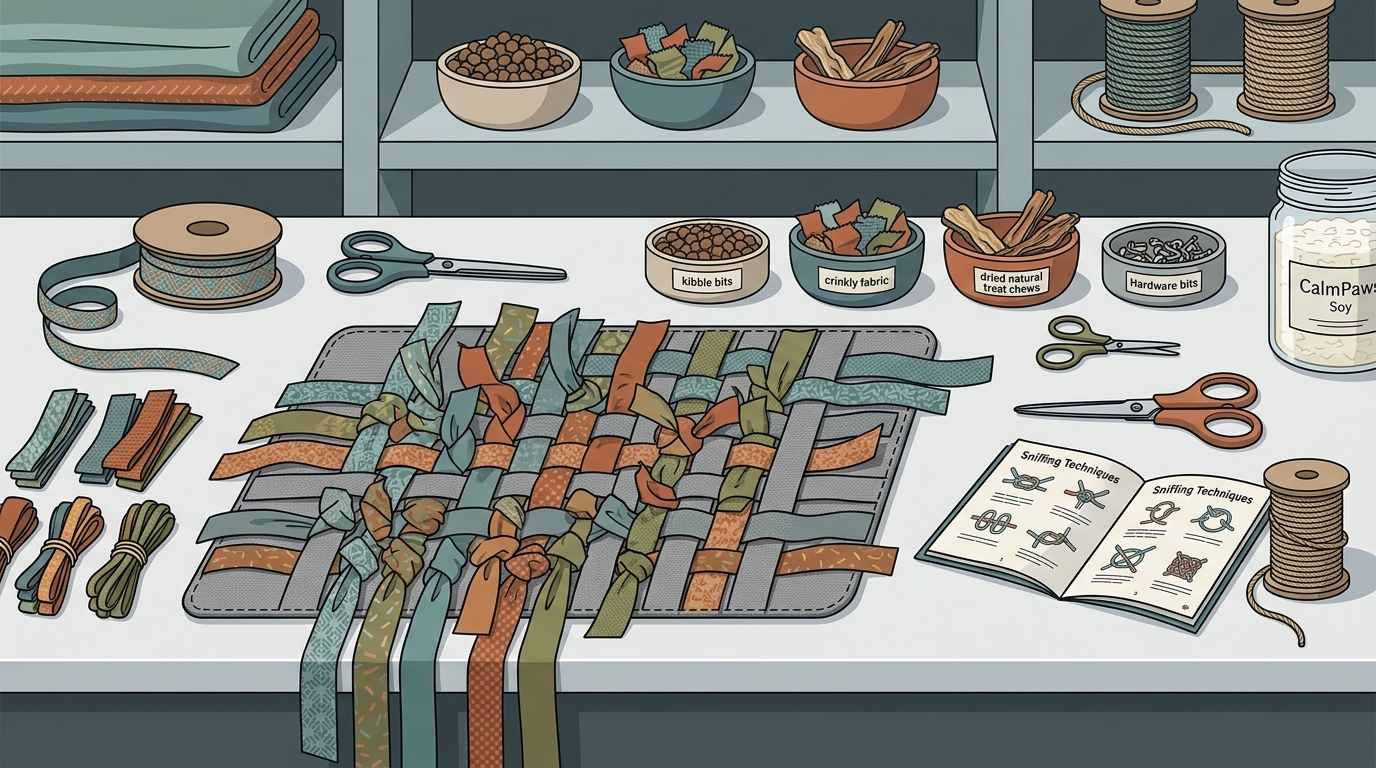
The snuffle mat is one of the most effective tools for reducing anxiety. It forces your dog to use their nose to find hidden treats, mimicking the way they would forage in the wild. A snuffle mat is a fabric mat with strips of fleece or felt attached, designed to hide food.
Materials Needed
- A non-slip rubber mat or a piece of heavy-duty canvas.
- Fleece fabric in various colors (avoid bright reds if your dog is overly stimulated).
- A strong fabric glue or a sewing machine.
- Scissors.
Step-by-Step Construction
- Prepare the Fabric: Cut the fleece into strips approximately two inches wide and twelve inches long. The length allows the dog to dig deeper, increasing the engagement time.
- Attach to Base: If using glue, apply a generous amount to the end of each strip and press it firmly onto the non-slip mat. If sewing, create a small loop at the end and stitch it securely to the base.
- Layering: Overlap the strips to create a dense, shaggy texture. The denser the mat, the harder it is for the dog to find the treats, which extends the calming effect.
- Final Check: Ensure all strips are secure. Loose fabric can be a choking hazard if ingested.
This project mirrors the quality found in our Bundles / Gift Sets, where we combine calming elements for maximum effect. You can start by hiding small kibble pieces and gradually move to larger treats as your dog masters the mat.
DIY Treat Dispensers
Interactive feeders are excellent for dogs who eat too quickly or become anxious during mealtime. A treat dispenser is a device that releases food only when manipulated by the animal. This turns feeding into a game, slowing down consumption and providing mental stimulation.
Simple Bottle Feeder
You can repurpose a clean plastic water bottle for this project. Cut several holes in the sides of the bottle. The size of the holes should be small enough that the dog has to work to get the kibble out but large enough to allow it to pass through. Fill the bottle with dry food and let your dog roll it around. This activity is particularly useful for rainy day enrichment when walks are not possible.
Knotting Rope Toys
Rope toys are a staple in dog care. They satisfy the chewing instinct and help clean teeth. A rope toy is a durable play item made from twisted or knotted natural fibers. At CalmPaws & Home, we offer cotton rope tug toys that are designed for gentle play.
To make your own, use thick cotton yarn or twine. Tie a series of tight knots along the length of the rope. You can create a loop at one end for easy handling. Ensure the knots are tight enough that they will not unravel during play. This DIY version allows you to choose the thickness and material that best suits your dog's chewing strength.
Scent Work Basics
Scent work is a powerful tool for building confidence in stressed dogs. It shifts their focus from their fears to a positive task. Scent work is the activity of tracking and identifying specific odors. It engages the olfactory bulb, which is directly connected to the emotional center of the brain.
Getting Started
Begin with a strong scent, such as lavender or vanilla, which are often associated with calming effects. Hide a treat near a cotton ball soaked in the scent. Let your dog sniff the area. When they find the treat, praise them calmly. Gradually increase the distance and difficulty of the hides.
This activity is particularly effective for leash reactivity training. By focusing on a scent task, the dog is less likely to react to triggers in the environment. It provides a constructive outlet for their energy and helps them associate the outside world with positive outcomes.
Key Takeaways
- Mental Stimulation: Sniffing and foraging activities lower cortisol levels in stressed dogs.
- Snuffle Mats: These mats encourage natural foraging behavior and can be made from simple fleece strips.
- Treat Dispensers: Repurposed bottles or commercial toys can slow down eating and reduce anxiety.
- Rope Toys: DIY rope toys provide a safe chewing outlet and satisfy tug instincts.
- Scent Work: Tracking scents builds confidence and redirects focus away from stressors.
- Quality Materials: Using non-toxic, durable materials is essential for safety.
- Gradual Progression: Start with easy tasks and increase difficulty to maintain engagement.
Frequently Asked Questions
How often should I use enrichment toys?
Daily use is recommended to maintain mental health. Even short sessions of ten to fifteen minutes can provide significant benefits.
Are DIY toys safe for aggressive chewers?
DIY toys should be monitored closely. For aggressive chewers, commercial toys made from durable rubber or nylon are often safer. Always inspect toys for wear and tear.
Can I use essential oils in DIY toys?
Some essential oils are toxic to dogs. Lavender and chamomile are generally considered safe in very low concentrations, but always consult your veterinarian first.
How do I know if my dog is stressed?
Signs of stress include panting, pacing, whining, and excessive shedding. Enrichment can help alleviate these symptoms by providing a constructive outlet.
What is the best material for a snuffle mat?
Fleece is popular because it is soft and durable. However, felt or heavy cotton can also work well. Ensure the material is non-toxic and easy to clean.
How long does a DIY toy last?
Longevity depends on the materials used and the dog's chewing style. Regular inspection is necessary to prevent ingestion of small parts.
Can I combine different enrichment activities?
Yes, combining activities can provide a more complex challenge. For example, hide a treat dispenser inside a snuffle mat.
Shop CalmPaws & Home
While DIY toys are a great way to bond with your dog, sometimes you need reliable, ready-to-use solutions. CalmPaws & Home offers a curated selection of calming products designed to support your dog's well-being. From calming bundles to digital guides, we provide everything you need to create a peaceful home. Visit our shop today to find the perfect tools for your furry friend.