

What Toys or Tools Help with Dog Boredom and Destructive Behavior?
Dog boredom is a primary driver of destructive behavior, often leading to chewing furniture, digging, or excessive barking. CalmPaws & Home provides enrichment tools designed to engage a dog's natural instincts and reduce idle time. This guide covers puzzle toys, treat dispensers, snuffle mats, chew toys, rotation strategies, and separation anxiety management. We explain how each tool works and how to implement them effectively in your home. For additional details, review the calmpaws home.
Puzzle Toys
Puzzle toys are interactive devices that require a dog to manipulate parts to access rewards. These tools stimulate cognitive function and provide mental exhaustion, which is often more tiring for a dog than physical exercise. By engaging the brain, puzzle toys help redirect energy away from destructive habits like chewing baseboards. For additional details, review the Your Shopping Cart ndash.
Types of Cognitive Challenges
Simple puzzles involve sliding panels or lifting flaps. More complex designs require multi-step sequences. Start with easy puzzles to build confidence. Gradually increase difficulty as your dog masters the mechanics. This progression keeps the toy engaging over time. For additional details, review the .
Implementation Tips
Introduce puzzle toys during calm periods. Avoid using them when the dog is already frustrated. Supervise initial sessions to ensure safety. If the dog gives up, assist them slightly to show the solution. This builds problem-solving skills without causing stress. For additional details, review the Customer Experience.
Treat Dispensing Toys
Treat dispensing toys are durable objects that release food or kibble when manipulated. These tools combine physical activity with mental engagement. The dog must roll, shake, or push the toy to release treats. This action mimics natural foraging behaviors. For additional details, review the Frequently Asked Questions.
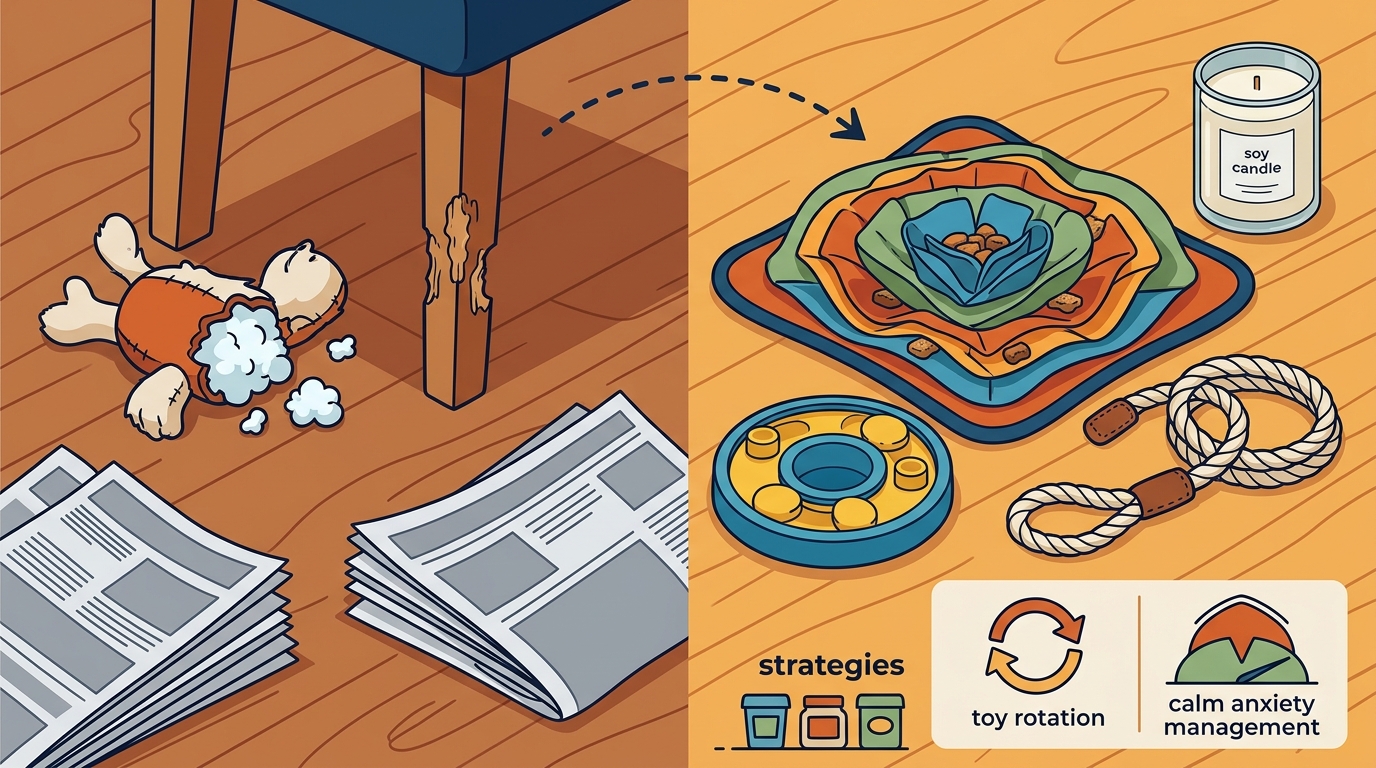
Food-Based Enrichment
Food-based enrichment is a powerful tool for managing boredom. It slows down eating and provides a sense of accomplishment. Use high-value treats for difficult dispensers. Use standard kibble for easier toys. This variety keeps the experience fresh.
Safety and Durability
Choose dispensers made from durable materials. Avoid toys with small parts that can break off. Inspect toys regularly for wear and tear. Replace any toy that shows signs of damage. Safety is paramount when using treat dispensers.
Snuffle Mats
Snuffle mats are fabric-based enrichment tools that hide treats within layers of material. They encourage the use of a dog's sense of smell. This olfactory stimulation is calming and engaging. Snuffle mats are particularly effective for dogs that enjoy foraging.
Olfactory Stimulation
Smelling is a primary way dogs explore their environment. Snuffle mats tap into this instinct. The act of sniffing out treats is mentally stimulating. It can tire a dog out significantly. This makes them a great tool for pre-walk enrichment.
Choosing the Right Mat
Consider the size and texture of the mat. Larger mats hold more treats. Different textures provide varying levels of difficulty. Start with a simple mat with fewer layers. Move to complex designs as your dog becomes proficient. This ensures the activity remains challenging.
Chew Toys
Chew toys are durable objects designed to satisfy a dog's natural urge to chew. Chewing is a normal behavior that helps maintain dental health. It also provides stress relief. Providing appropriate chew toys redirects destructive chewing away from household items.
Material Selection
Choose materials based on your dog's chewing style. Light chewers may prefer rubber or rope. Heavy chewers need durable rubber or nylon. Avoid toys that are too soft or too hard. The right texture provides the necessary resistance without damaging teeth.
Monitoring Chewing
Supervise your dog when introducing new chew toys. Watch for signs of excessive chewing. If the toy breaks easily, it may not be suitable. Rotate chew toys to maintain interest. A fresh toy can re-engage a bored dog.
Toy Rotation
Toy rotation is a strategy that involves keeping only a few toys available at a time. This prevents boredom and maintains novelty. Dogs can become desensitized to toys they see every day. Rotation keeps the environment fresh and engaging.
Creating a Rotation System
Store most toys in a bin or closet. Select three to five toys for active use. Rotate these toys every few days. Introduce one or two new toys from storage. This mimics the arrival of a new toy. It re-sparks interest in familiar items.
Benefits of Rotation
Rotation extends the lifespan of your toys. It prevents the dog from losing interest. It also makes cleanup easier. Fewer toys on the floor means less clutter. This strategy is simple and highly effective for managing boredom.
Separation Anxiety
Separation anxiety is a behavioral condition where dogs show distress when left alone. It can lead to destructive behavior, vocalization, and house soiling. Enrichment tools can help manage mild cases. They provide a distraction and a sense of security. However, severe cases require professional help.
Enrichment for Alone Time
Use long-lasting enrichment tools when leaving your dog alone. Frozen treat dispensers or stuffed snuffle mats can keep them occupied. Avoid using punishment for anxiety-driven behavior. Focus on positive associations with alone time. Gradually increase the duration of absences.
When to Seek Help
If destructive behavior persists despite enrichment, consult a professional. A certified behaviorist or veterinarian can provide a tailored plan. Enrichment is a tool, not a cure. It works best as part of a comprehensive management strategy. Do not rely solely on toys for severe anxiety.
Comparison of Enrichment Tools
| Tool Type | Primary Benefit | Best For | Engagement Level |
|---|---|---|---|
| Puzzle Toys | Cognitive stimulation | Smart, active dogs | High |
| Treat Dispensers | Physical and mental engagement | Food-motivated dogs | Medium |
| Snuffle Mats | Olfactory stimulation | Calming, foraging dogs | Medium |
| Chew Toys | Stress relief, dental health | Chewers, teething puppies | Low to Medium |
Key Takeaways
- Puzzle toys engage the brain and provide mental exhaustion.
- Treat dispensers combine physical activity with food rewards.
- Snuffle mats utilize a dog's sense of smell for calming enrichment.
- Chew toys satisfy natural chewing urges and protect furniture.
- Toy rotation maintains novelty and prevents boredom.
- Separation anxiety requires a combination of enrichment and professional guidance.
- Supervise all new toys to ensure safety and durability.
- Start with simple tools and increase complexity gradually.
Frequently Asked Questions
How often should I rotate my dog's toys?
Rotate toys every three to seven days. This frequency keeps the environment fresh. It prevents your dog from losing interest in familiar items.
Are puzzle toys suitable for all dogs?
Most dogs can use puzzle toys. Start with simple designs for puppies or senior dogs. Increase complexity for smart, active breeds.
Can enrichment tools cure separation anxiety?
No, enrichment tools do not cure separation anxiety. They can help manage mild cases. Severe anxiety requires professional behavioral therapy.
How do I choose the right chew toy?
Choose based on your dog's chewing style. Light chewers need softer materials. Heavy chewers require durable rubber or nylon.
What is the best way to introduce a new toy?
Introduce one new toy at a time. Supervise the initial interaction. Reward your dog for engaging with the toy positively.
Do snuffle mats work for all dogs?
Snuffle mats work well for dogs that enjoy foraging. Some dogs may prefer physical play. Observe your dog's preferences to choose the right tool.
How long should I leave a treat dispenser with my dog?
Leave the dispenser for 10 to 15 minutes. This prevents overeating. It also keeps the activity engaging without causing frustration.
Can I use food in puzzle toys for weight management?
Yes, use kibble instead of high-calorie treats. This helps manage calorie intake. It provides enrichment without adding extra weight.