Thunderstorms and fireworks trigger intense fear in many dogs, leading to pacing, hiding, and vocalization. CalmPaws & Home provides comfort-focused enrichment tools that support a calm environment during these events. This guide covers six practical strategies: safe space setup, sound masking, anxiety medication, desensitization training, distraction techniques, and pressure wraps. For additional details, review the Terms of service ndash.
Safe Space Setup
Creating a secure retreat is the first step in managing noise phobia. A safe space is a designated area where your dog feels protected from external stimuli. This zone should be quiet, dim, and free from high-traffic household activity. Choose a location away from windows and exterior doors, as these amplify sound and visual flashes. A closet, a bathroom with a fan, or a covered crate can serve as effective shelters.
Choosing the Right Location
Adding Comfort Elements
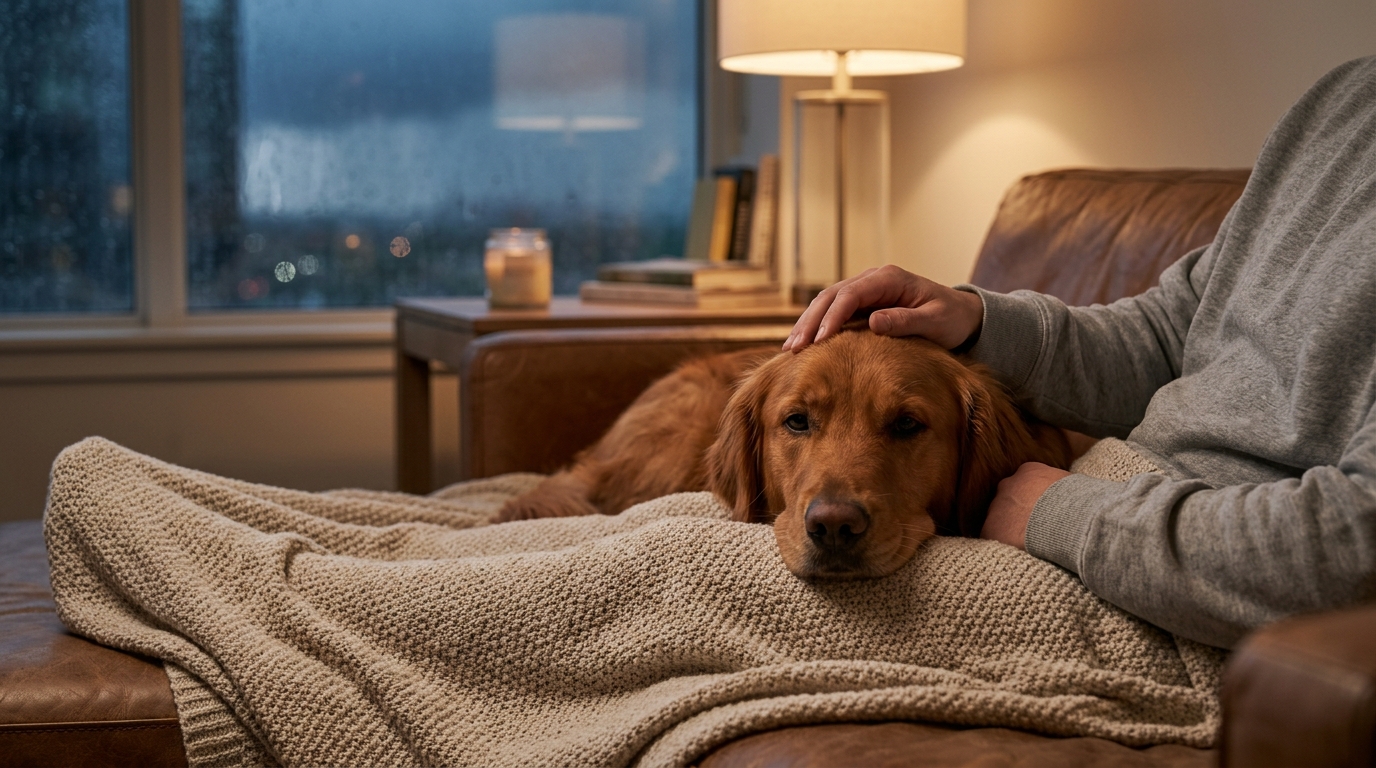
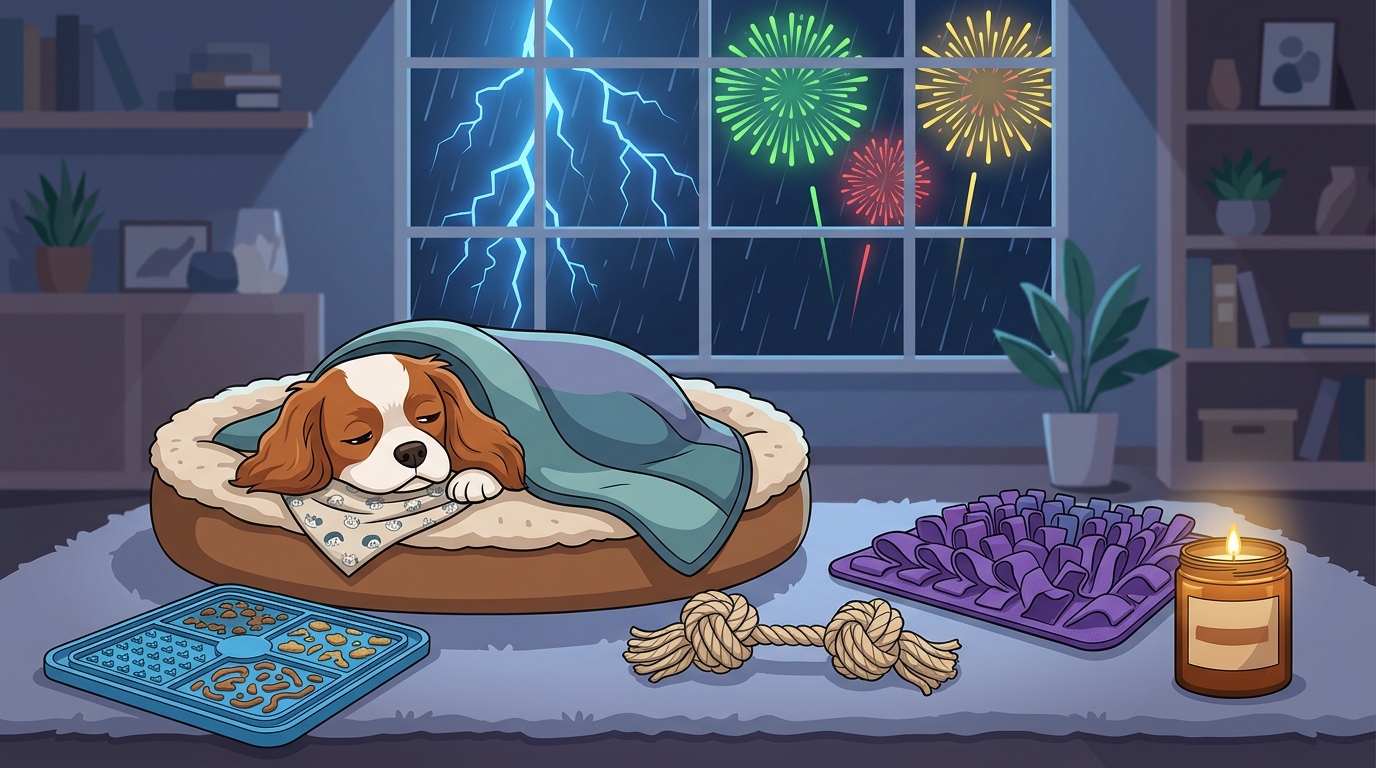
Soft bedding and familiar scents help lower arousal levels. Place a worn t-shirt or a blanket that carries your scent in the safe space to provide reassurance. CalmPaws & Home offers calming soy candles in scents like lavender and vanilla, which can create a soothing atmosphere for both you and your dog. While these products are not medical treatments, they contribute to a relaxed environment that supports your dog's comfort.
Sound Masking
Sound masking involves using background noise to reduce the impact of sudden loud sounds. This technique is a behavioral strategy that helps dogs focus on a consistent, predictable audio source rather than the erratic noises of storms or fireworks. White noise, brown noise, or classical music can effectively lower the perceived intensity of external sounds. The goal is not to eliminate the noise entirely but to make it less startling.
Types of Background Noise
White noise generators produce a steady hiss that covers a wide range of frequencies. Brown noise is deeper and may be more soothing for some dogs. Classical music, particularly pieces with a slow tempo, has been observed to reduce stress behaviors in canines. Experiment with different audio sources to determine what your dog responds to best. Some dogs may prefer silence, while others find comfort in consistent sound.
Implementation Tips
Start sound masking before the storm or fireworks begin. If you wait until the first thunderclap, your dog may already be in a state of high alert. Use a timer or a smart speaker to automate the process. Keep the volume at a level that is noticeable but not overwhelming. If your dog shows signs of distress despite the masking, consider combining it with other strategies from this guide.
Anxiety Medication
Anxiety medication is a veterinary intervention that may be recommended for dogs with severe noise phobia. These medications are prescribed by a veterinarian and are not available over the counter. They work by altering brain chemistry to reduce fear and anxiety responses. It is crucial to consult a professional before considering any pharmacological approach. Self-medicating your dog can lead to adverse effects and may mask underlying health issues.
When to Consult a Vet
Consider a veterinary consultation if your dog exhibits extreme panic, such as destructive behavior, self-injury, or inability to function during storms. A vet can assess your dog's overall health and determine if medication is appropriate. They may prescribe short-term anxiolytics or long-term management plans. Always follow the prescribed dosage and schedule. Do not stop medication abruptly without veterinary guidance.
Non-Medical Alternatives
For mild to moderate anxiety, non-medical strategies are often sufficient. Behavioral modification, environmental management, and enrichment tools can make a significant difference. CalmPaws & Home focuses on comfort and enrichment products that support a calm routine. These tools are designed to help dogs settle and relax, but they are not a substitute for professional veterinary care. If your dog's anxiety is severe, seek medical advice first.
Desensitization Training
Desensitization training is a systematic process of exposing your dog to low-intensity versions of a feared stimulus and gradually increasing the intensity. This method is a form of counter-conditioning that aims to change your dog's emotional response to noise. The key is to keep the stimulus below the threshold where your dog shows stress signs. If your dog becomes anxious, reduce the intensity and proceed more slowly. Consistency and patience are essential for success.
Step-by-Step Process
Begin by playing recordings of thunder or fireworks at a very low volume, where your dog remains relaxed. Pair the sound with high-value treats to create a positive association. Gradually increase the volume over several sessions, ensuring your dog stays calm at each level. If your dog shows signs of stress, return to the previous level. This process may take weeks or months, depending on your dog's sensitivity. Never force your dog to endure a level of noise that causes panic.
Common Mistakes to Avoid
One common error is increasing the volume too quickly. This can overwhelm your dog and reinforce fear. Another mistake is practicing in a stressful environment. Choose a quiet, familiar space for training sessions. Avoid using punishment or scolding if your dog reacts negatively. This can worsen anxiety and damage your bond. Desensitization is a long-term commitment, and progress may be slow. Celebrate small victories to maintain motivation.
Distraction Techniques
Distraction techniques redirect your dog's focus from the source of fear to a more engaging activity. This approach is a behavioral tool that helps break the cycle of anxiety and panic. Engaging your dog's mind with puzzles, games, or interactive toys can lower stress levels. The key is to choose activities that your dog finds enjoyable and that require mental effort. Distraction works best when introduced before the noise becomes overwhelming.
Interactive Toys and Games
Food puzzles and snuffle mats are excellent for mental stimulation. These toys encourage your dog to use their nose and problem-solving skills, which can be calming. CalmPaws & Home offers a calming snuffle mat in a flower design, which provides a gentle way to slow down mealtime and engage your dog's senses. Rope toys and tug games can also be effective, but only if your dog is not in a state of high panic. If your dog is too stressed to play, focus on creating a safe space and using sound masking instead.
Timing and Context
Introduce distraction activities before the storm or fireworks begin. If you wait until your dog is already panicking, they may not be able to focus on the toy. Use high-value treats to encourage engagement. Keep sessions short and positive. If your dog loses interest or becomes anxious, stop the activity and try a different approach. Distraction is not a cure, but it can help manage mild to moderate anxiety in the moment.
Pressure Wraps
Pressure wraps are garments that apply gentle, constant pressure to a dog's body. This technique is based on the concept of deep pressure stimulation, which can have a calming effect on the nervous system. While not a medical treatment, many dogs find comfort in the snug fit of a wrap. The pressure can help reduce pacing and trembling. It is important to choose a wrap that fits properly and does not restrict movement or breathing.
How to Use a Pressure Wrap
Introduce the wrap gradually, allowing your dog to sniff and wear it for short periods during calm times. This helps prevent the wrap from becoming associated with stress. Once your dog is comfortable, you can use the wrap during storms or fireworks. Ensure the wrap is not too tight, as this can cause discomfort. Monitor your dog for signs of distress, such as excessive panting or attempts to remove the wrap. If your dog does not tolerate the wrap, do not force it.
Combining with Other Strategies
Pressure wraps can be used in conjunction with other calming techniques. For example, you can place your dog in a safe space, turn on sound masking, and put on a pressure wrap. This multi-sensory approach may provide greater comfort. CalmPaws & Home focuses on creating a holistic environment for relaxation. While we do not sell pressure wraps, we recommend consulting with a professional to find a product that suits your dog's size and needs.
Comparison of Calming Strategies
| Strategy | Best For | Time to See Results | Cost |
|---|---|---|---|
| Safe Space Setup | Mild to moderate anxiety | Immediate | Low |
| Sound Masking | Mild to moderate anxiety | Immediate | Low to Moderate |
| Anxiety Medication | Severe anxiety | Varies | High |
| Desensitization Training | Long-term management | Weeks to Months | Low (Time Investment) |
| Distraction Techniques | Mild anxiety | Immediate | Low |
| Pressure Wraps | Mild to moderate anxiety | Immediate | Moderate |
Key Takeaways
- Create a safe, quiet space away from windows and exterior doors.
- Use sound masking with white noise or classical music to reduce the impact of loud sounds.
- Consult a veterinarian before considering anxiety medication for severe cases.
- Desensitization training requires patience and gradual exposure to noise.
- Distraction techniques like snuffle mats and puzzles can help redirect focus.
- Pressure wraps may provide comfort through deep pressure stimulation.
- Combine multiple strategies for the best results.
- Always prioritize your dog's safety and comfort.
Frequently Asked Questions
How do I know if my dog has noise phobia?
Signs of noise phobia include trembling, hiding, pacing, vocalization, and destructive behavior during storms or fireworks. If your dog shows these signs consistently, they may have a noise phobia. Consult a veterinarian for a proper assessment.
Can I use calming products every day?
Yes, you can use calming products like soy candles and snuffle mats daily. These products are designed for comfort and enrichment. However, if you are using medication, follow your veterinarian's instructions.
How long does desensitization training take?
Desensitization training can take weeks to months, depending on your dog's sensitivity. Consistency and patience are key. Progress may be slow, but it is worth the effort.
Are pressure wraps safe for all dogs?
Pressure wraps are generally safe, but they should fit properly and not restrict movement. Monitor your dog for signs of discomfort. If your dog does not tolerate the wrap, do not force it.
What is the best sound masking option?
The best sound masking option depends on your dog's preference. White noise, brown noise, and classical music are common choices. Experiment to find what works best for your dog.
Can I combine multiple calming strategies?
Yes, combining multiple strategies is often the most effective approach. For example, you can use a safe space, sound masking, and a pressure wrap together. This multi-sensory approach can provide greater comfort.
When should I see a vet for my dog's anxiety?
See a vet if your dog exhibits extreme panic, destructive behavior, or self-injury. A vet can assess your dog's health and recommend appropriate treatment options.
Conclusion
Helping your dog relax during thunderstorms and fireworks requires a combination of environmental management, behavioral training, and comfort tools. By creating a safe space, using sound masking, and engaging your dog in distraction activities, you can reduce their stress levels. For severe cases, consult a veterinarian about medication options. CalmPaws & Home is dedicated to providing high-quality comfort and enrichment products that support a calm and happy home. Explore our collection of calming soy candles, snuffle mats, and other wellness items to help your dog feel secure during stressful events. Visit our home page to discover more about our products and mission.