Dog anxiety is a pervasive issue affecting millions of households globally. According to the American Kennel Club, separation anxiety and noise phobias are among the most common behavioral challenges reported by pet owners. This stress manifests in destructive chewing, excessive barking, and physical symptoms like panting or trembling. The good news is that targeted environmental enrichment and routine adjustments can significantly reduce these symptoms. By integrating specific calming tools and mental stimulation exercises into your daily life, you can help your dog feel safer and more secure.
Understanding Canine Anxiety Triggers
Before implementing solutions, it is vital to identify what causes your dog's stress. Anxiety in dogs is not a single condition but a response to perceived threats. Common triggers include loud noises like thunderstorms or fireworks, separation from their primary caregiver, or changes in the household environment such as a new baby or guest.
Recognizing the early signs of stress is the first step toward intervention. Dogs often communicate discomfort through subtle body language before it escalates to panic. Watch for yawning, lip licking, whale eye (showing the whites of the eyes), or tucked tails. If you notice these signs during a holiday gathering or a walk in a busy park, your dog is likely overwhelmed. Addressing these triggers requires a combination of environmental management and positive reinforcement. For more insights on managing seasonal stress, read our guide on the anxious dog's holiday survival guide.
The Power of Sniffing for Calm
One of the most effective, yet underutilized, methods for calming a dog is sniffing. Research indicates that sniffing lowers a dog's heart rate and reduces cortisol levels, the primary stress hormone. This biological response is why a twenty-minute sniffing session can tire a dog more effectively than an hour of brisk walking.
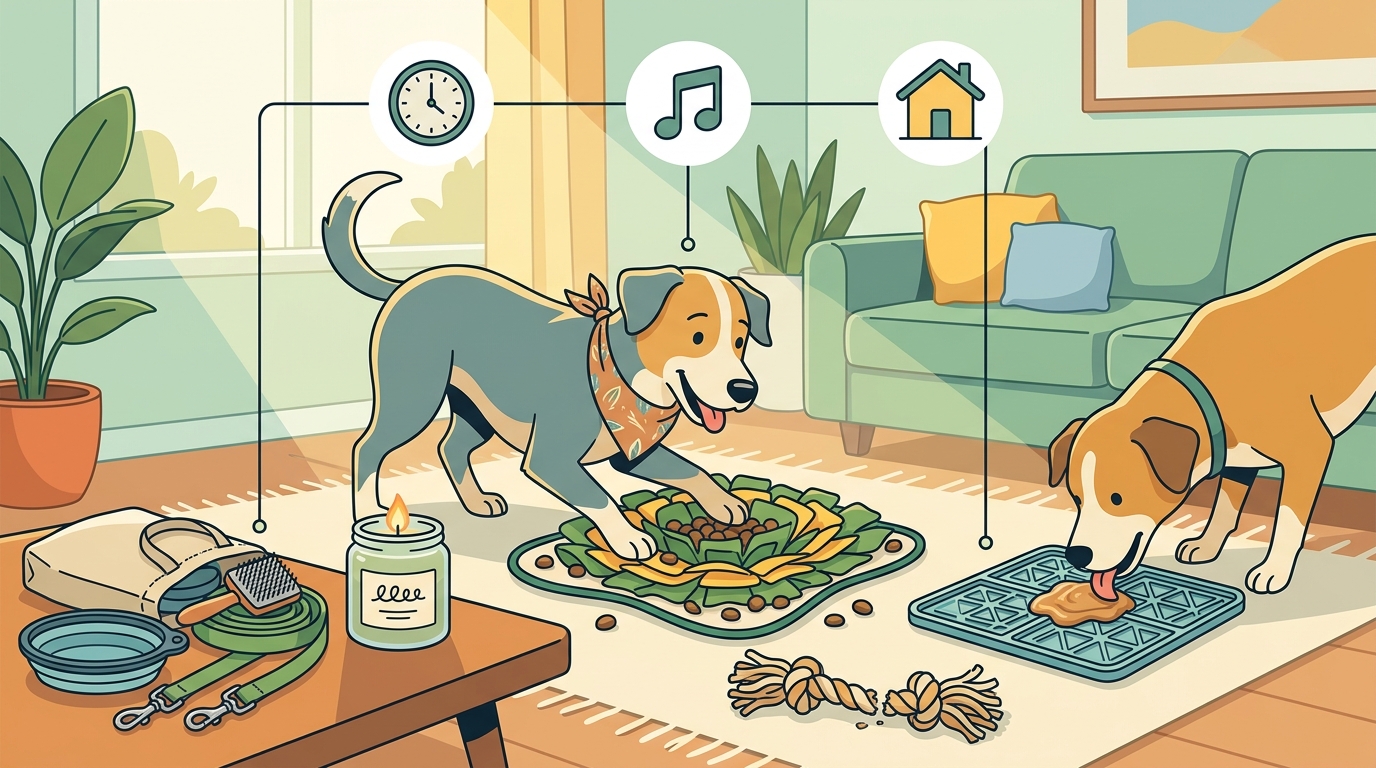
To harness this power, incorporate "sniffari" walks into your routine. Instead of focusing on distance or speed, let your dog lead the way and explore scents. This mental engagement satisfies their natural instinct to investigate their environment. You can also replicate this indoors using snuffle mats. These mats hide kibble or treats within fabric strips, forcing your dog to use their nose to find food. This activity promotes focus and distracts from anxious thoughts.
Essential Enrichment Tools
Creating a calm home environment often requires physical tools that provide comfort and engagement. Enrichment toys are not just for play; they are therapeutic devices that help regulate a dog's emotional state. When selecting tools, look for items that encourage slow feeding, problem-solving, or tactile comfort.
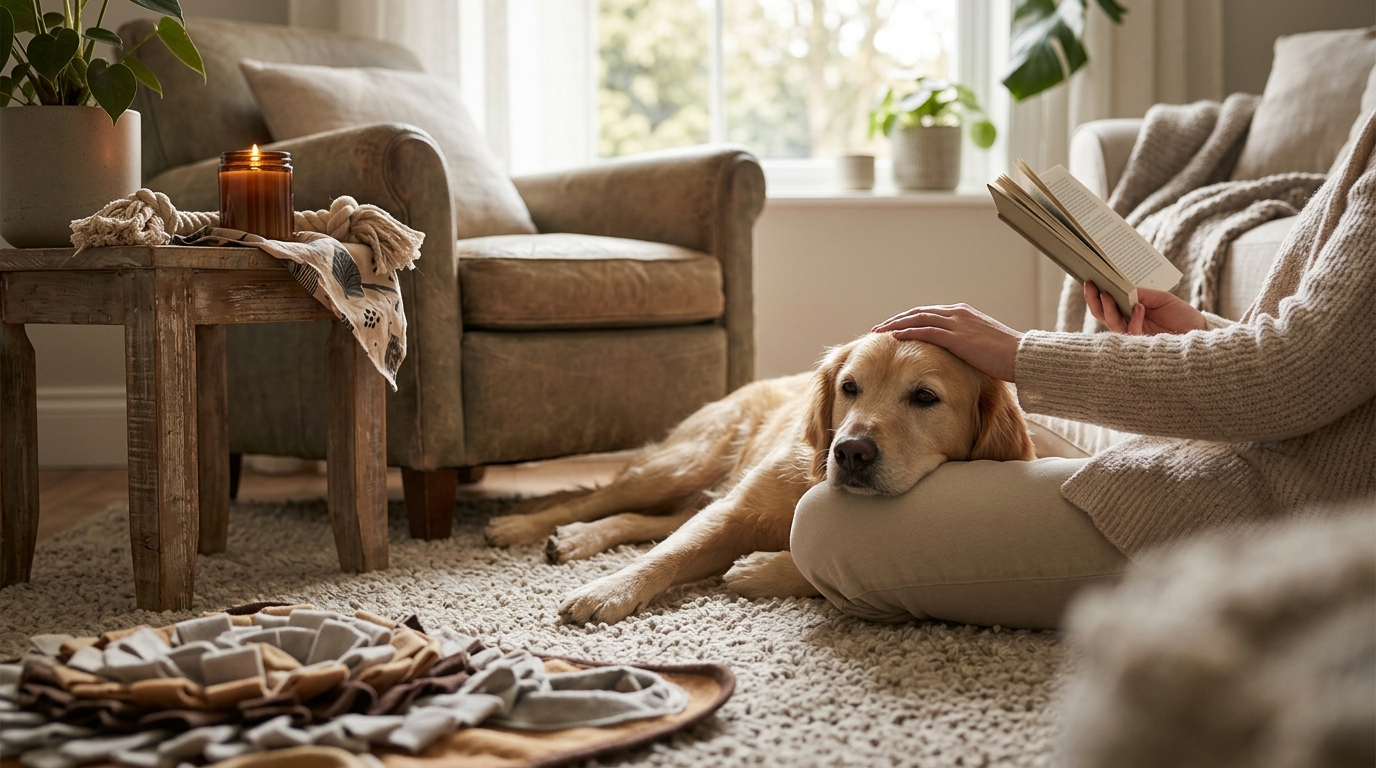
Chew toys and tug ropes serve dual purposes. They provide an outlet for physical energy while releasing endorphins. A cotton rope tug toy is excellent for interactive play that strengthens your bond while burning off nervous energy. For dogs who prefer solitary comfort, weighted blankets or calming beds can provide deep pressure therapy, similar to a hug. Additionally, incorporating calming scents like lavender through soy candles can create a soothing atmosphere for both you and your pet.
Building a Structured Routine
Predictability is the antidote to anxiety for many dogs. A consistent daily schedule helps dogs understand what to expect, reducing the uncertainty that fuels stress. This includes fixed times for feeding, walks, play, and rest. When changes are inevitable, such as a vacation or a move, introduce them gradually.
For example, if you are preparing for a holiday, start desensitizing your dog to the changes weeks in advance. Play recordings of doorbell rings or fireworks at low volumes while offering high-value treats. This process, known as counter-conditioning, helps your dog associate previously scary stimuli with positive outcomes. For detailed steps on this process, explore our article on helping your dog adjust to fall walks.
Comparing Calming Products
Not all calming solutions work for every dog. Below is a comparison of common enrichment tools to help you choose the right approach for your pet's specific needs.
| Product Type | Best For | Key Benefit | Price Range |
|---|---|---|---|
| Snuffle Mat | Indoor mental stimulation | Encourages natural foraging instincts | $15 - $20 |
| Rope Tug Toy | Interactive play & energy release | Strengthens bond and burns energy | $10 - $15 |
| Calming Candle | Environmental scent therapy | Creates a relaxed home atmosphere | $12 - $15 |
| Bundle Sets | Comprehensive care kits | Combines multiple calming strategies | $20 - $45 |
Key Takeaways
- Sniffing reduces cortisol: Dedicated sniffing time is a scientifically backed method for lowering stress hormones in dogs.
- Routine creates safety: Predictable daily schedules help anxious dogs feel more secure in their environment.
- Enrichment is therapeutic: Tools like snuffle mats and tug toys provide mental stimulation that distracts from anxiety triggers.
- Desensitization works: Gradually exposing dogs to triggers at low volumes can recondition their response over time.
- Environmental scents matter: Calming fragrances like lavender can enhance the overall relaxation of your home.
- Interactive play builds confidence: Regular tug sessions strengthen the human-dog bond and release endorphins.
- Bundle savings offer variety: Combining products like candles and toys provides a multi-sensory approach to calm.
Frequently Asked Questions
How long does it take to calm an anxious dog?
The timeline varies based on the severity of the anxiety and the consistency of the training. Some dogs show improvement within a few weeks of routine changes, while others may require months of dedicated desensitization work.
Are snuffle mats effective for senior dogs?
Yes, snuffle mats are excellent for senior dogs as they provide low-impact mental stimulation. They encourage gentle foraging without requiring intense physical exertion, making them ideal for older pets.
Can calming candles help with separation anxiety?
Calming candles can create a soothing background environment, but they are not a standalone cure for separation anxiety. They work best when combined with gradual departure training and interactive toys.
What is the best toy for a dog that chews destructively?
Durable rope toys or rubber chew toys are often the best options. They satisfy the urge to chew while being safer than household items. Always supervise your dog during play to ensure safety.
How often should I use a snuffle mat?
Using a snuffle mat for 10 to 15 minutes daily can provide significant mental enrichment. It is particularly useful during bad weather or when your dog needs a break from physical exercise.
Do rope toys help with leash reactivity?
While rope toys do not directly fix leash reactivity, they help burn off excess energy and frustration. A dog with more controlled energy levels is often easier to manage during walks.
What is the difference between a snuffle mat and a puzzle toy?
A snuffle mat relies on scent and foraging, engaging the dog's nose. Puzzle toys typically rely on problem-solving and manipulation, engaging the dog's paws and cognitive skills. Both are valuable for different types of enrichment.
How do I introduce a new calming product to my dog?
Introduce any new product slowly. Let your dog sniff it first, then associate it with positive experiences like treats or praise. Never force interaction, as this can create negative associations.
Shop Calming Essentials
Creating a calm home starts with the right tools. At CalmPaws & Home, we curate thoughtfully designed comfort pieces for dogs and the people who love them. Explore our bundles and gift sets to find the perfect combination of enrichment and relaxation for your pet. Visit our shop collection today to begin your journey toward a calmer, happier home.