Reactivity in dogs is a complex behavioral challenge that affects millions of households worldwide. According to recent veterinary behavioral studies, approximately 20 to 30 percent of dogs exhibit some form of leash reactivity or fear-based aggression. This statistic highlights that your dog is not alone in struggling with overstimulation. The good news is that with consistent, gentle intervention, you can transform chaotic walks into peaceful experiences. This guide provides a structured approach to managing reactivity through environmental control, mental stimulation, and targeted product support. (Collections ndash calmpaws amp)
Understanding the Root of Reactivity
Reactivity is not a character flaw. It is a stress response. When a dog barks, lunges, or whines at other dogs or people, they are communicating overwhelm. This behavior often stems from fear, frustration, or a lack of proper socialization during critical developmental windows. Understanding this distinction is the first step toward effective intervention.
Many owners mistakenly punish the barking, which only increases the dog's anxiety. Instead, the goal is to change the emotional association. We want the dog to view triggers as predictors of good things, not threats. This process requires patience and a deep understanding of canine body language. You must learn to read the subtle signs of stress before the reaction occurs.
For more insights on reading your dog's sleep and rest patterns, which often reflect their daytime stress levels, explore our guide on Reading Your Dog's Sleep. Recognizing these patterns helps you anticipate when your dog is nearing their threshold.
Environmental Management Techniques
Management is the foundation of behavior modification. You cannot train a dog who is constantly in fight-or-flight mode. Therefore, controlling the environment is crucial. This involves maintaining distance from triggers until your dog is calm enough to learn.
Identifying Threshold Distance
Every dog has a threshold distance. This is the specific distance from a trigger where the dog can still process information and respond to you. If the trigger is too close, the dog enters "red zone" reactivity. In this state, learning is impossible. You must identify this distance for your specific dog and start training well within that safe zone.
Varying Your Walking Routes
Routine can sometimes exacerbate reactivity if the dog anticipates triggers along a familiar path. Varying your routes keeps the environment novel and reduces predictability. This novelty engages the dog's brain in a positive way, shifting focus from fear to curiosity. Short, frequent walks are often more effective than one long, exhausting walk.
If you are struggling with the logistics of walking during different weather conditions, our article on Fall Walks offers practical advice on adjusting to seasonal changes. Similarly, for rainy days, check out Rainy Day Enrichment to keep your dog engaged indoors.
The Power of Mental Stimulation
Mental exhaustion is just as valuable as physical exhaustion for a reactive dog. A tired dog is a calm dog. Enrichment activities provide an outlet for their energy and focus, reducing the likelihood of reactive outbursts.
The Importance of Sniffing
Sniffing is a natural calming mechanism for dogs. When a dog sniffs, their heart rate slows, and they release endorphins. Allowing your dog to sniff freely during walks, even if it means moving slower, can significantly reduce their stress levels. This practice, often called "sniffari," turns a walk into a mental puzzle rather than a patrol.
For a deeper dive into why scent work is so effective, read The Power of Sniffing. This article explains the neurological benefits of scent work for anxious dogs.
Indoor Games for Rainy Days
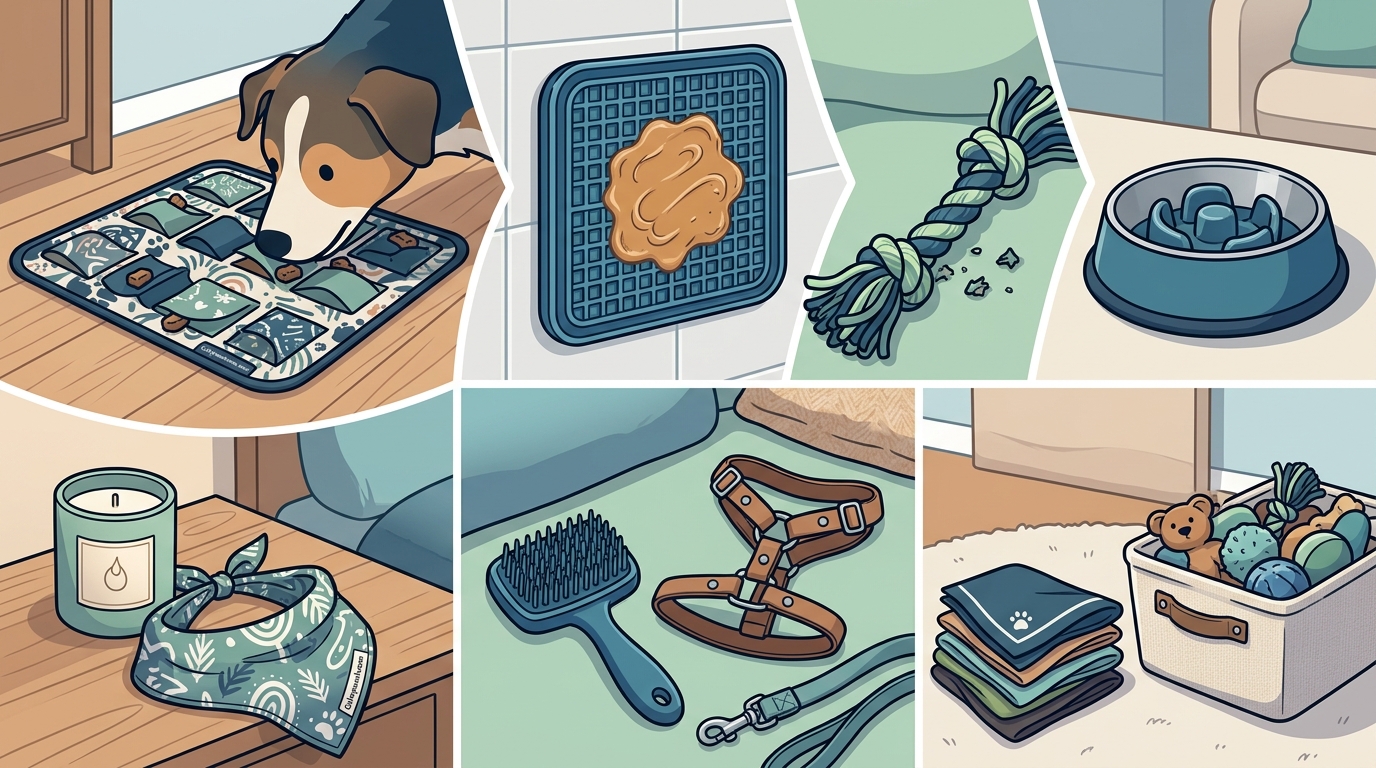
When outdoor walks are not possible, indoor enrichment becomes vital. Games that require problem-solving, such as hiding treats or using puzzle feeders, can tire a dog out in a fraction of the time of physical exercise. These games tap into a different kind of tiredness, one that comes from mental engagement rather than physical exertion.
Explore our Digital Downloads for printable enrichment games and training guides that you can use immediately at home.
Sensory Calming Tools and Products
While training is the primary tool, sensory aids can provide additional support. These products help regulate a dog's nervous system, making them more receptive to training.
Calming Scents
Scents play a powerful role in canine comfort. Certain essential oils, such as lavender and chamomile, have been shown to have calming effects on dogs. Using a calming spray on your dog's bed or during walks can create a positive association with relaxation. However, always ensure the products used are safe for pets and free from toxic ingredients.
Our CalmPaws & Home Calming Soy Candle is designed to create a serene atmosphere in your home. By diffusing these scents, you can help lower the overall stress level in your household, benefiting both you and your dog.
Comfort Toys
Chewing and tug toys provide physical outlets for stress. A Cotton Rope Tug Toy can be excellent for interactive play, strengthening your bond while allowing your dog to release pent-up energy. For dogs who prefer solitary play, a Rope Toy with Treat Ball offers both chewing satisfaction and mental stimulation.
Training Fundamentals for Calmness
Training reactive dogs requires a shift from traditional obedience methods to positive reinforcement and desensitization. The goal is to build confidence and trust.
Desensitization and Counter-Conditioning
Desensitization involves exposing your dog to their trigger at a low intensity, well below their threshold. Counter-conditioning pairs this exposure with high-value rewards. Over time, the dog learns that the trigger predicts delicious treats, changing their emotional response from fear to anticipation.
This process is gradual and requires consistency. Never rush the steps. If your dog reacts, you have moved too fast. Go back to a previous step where they were successful. For more on building independence, see Home Alone, Happily.
Calm Greetings
Reactivity often manifests during greetings. Teaching your dog a "place" command or a "look at me