
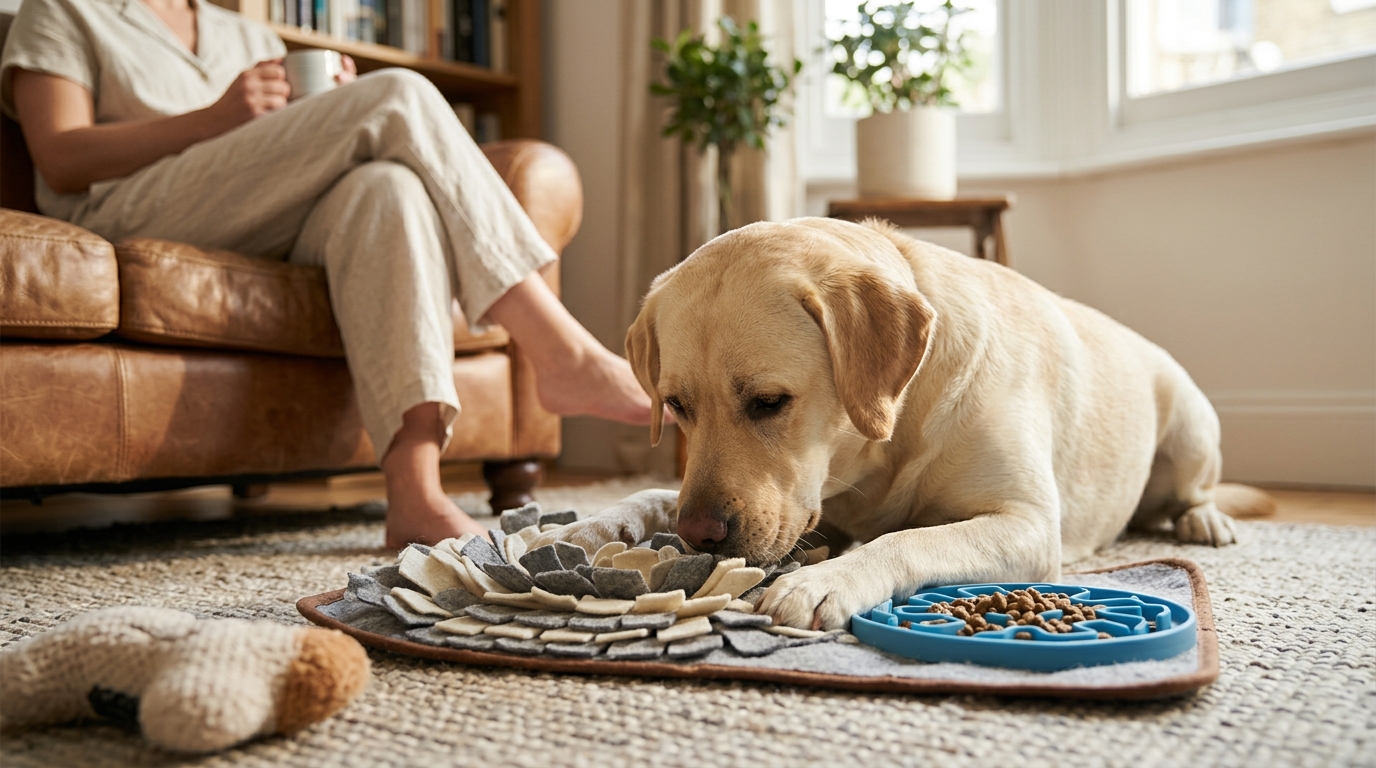
Destructive behavior in dogs is rarely about spite. It is almost always a symptom of unmet physical or mental needs. According to the American Kennel Club, a significant percentage of behavioral complaints stem from boredom and excess energy that owners do not know how to channel. When a dog lacks appropriate outlets, they create their own, often resulting in chewed furniture, dug-up yards, or excessive barking. The solution lies in structured mental stimulation. This guide explains how to set up enrichment toys and puzzle games to redirect that energy into positive, calming activities.
Understanding the Root Cause
Before introducing new tools, it is vital to understand why your dog is destroying items. Dogs are natural foragers and hunters. In the wild, they spend hours searching for food and navigating complex environments. Domestic life often strips away these challenges, leaving a void. When that void is not filled, dogs seek stimulation anywhere they can find it.
Destructive chewing is a primary outlet for this frustration. It releases endorphins that calm the dog down. If you simply remove the chew toys without providing an alternative, the behavior will likely return in a different form, such as digging or escaping. The goal is to provide a more satisfying and appropriate outlet for that same drive.
For more insights on managing anxiety and stress in dogs, you can explore our Calm Living blog posts which cover various behavioral topics.
Selecting the Right Toys
Not all enrichment toys are created equal. The effectiveness of a toy depends on your dog's play style and durability needs. Using the wrong toy can lead to frustration or safety hazards.
Chew-Resistant Options
For power chewers, soft plush toys are a quick loss. You need durable materials that can withstand intense gnawing. Rubber-based toys are ideal because they can be stuffed with high-value treats. This forces the dog to work for their reward, extending playtime and mental engagement.
At calmpaws&home, we curate products that balance durability with comfort. Our selection includes robust rope toys designed for tugging and chewing, which help clean teeth while providing physical exercise. A Cotton Rope Tug Toy is an excellent starting point for interactive play that burns energy quickly.
Sensory Engagement
Sensory toys engage multiple senses at once. Textured surfaces provide tactile feedback, while toys that make noise can trigger a dog's prey drive in a controlled way. However, noise can be a double-edged sword. If your dog is easily overstimulated, opt for silent puzzles that rely on manipulation rather than sound.
We also offer curated bundles that combine different types of enrichment. For example, pairing a durable toy with a calming scent can help transition a high-energy dog into a relaxed state after play.
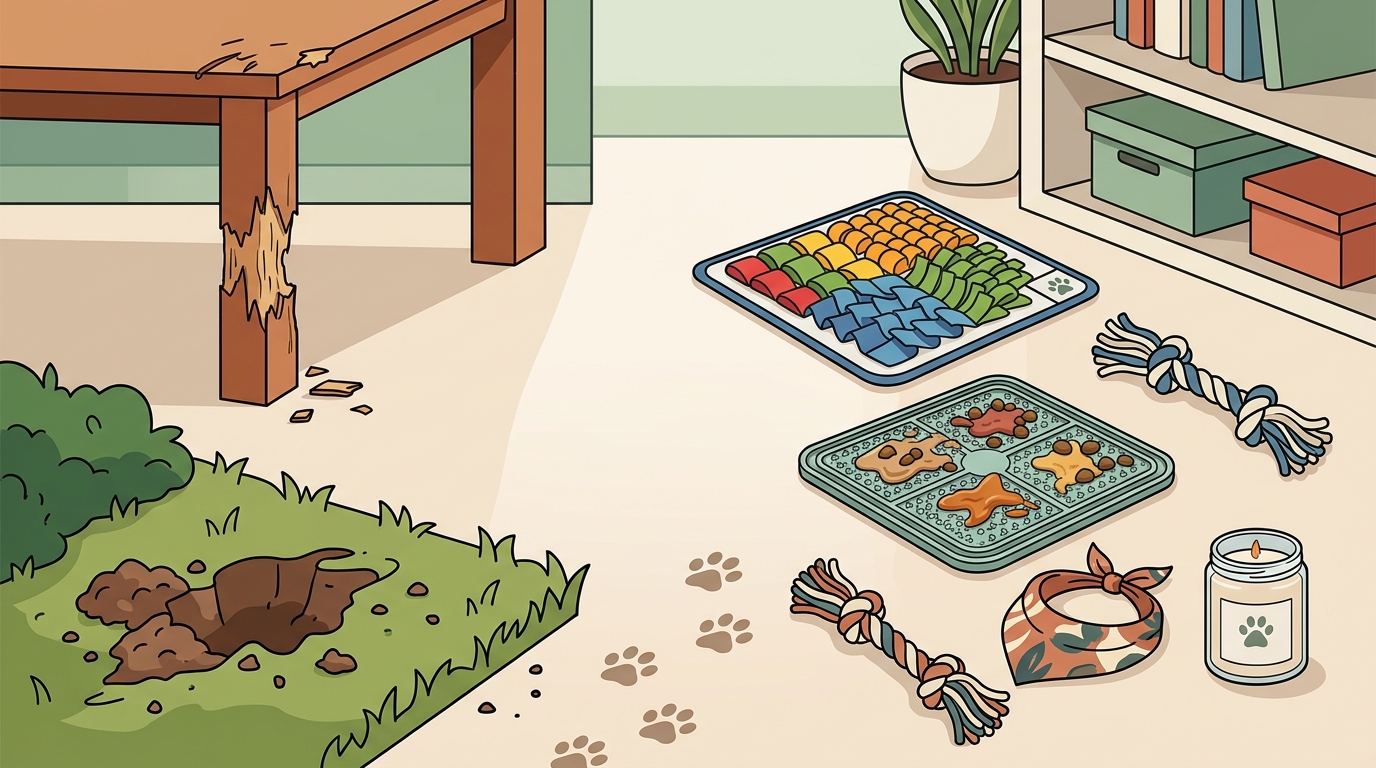
Setting Up Puzzle Games
Puzzle toys are the cornerstone of mental enrichment. They require problem-solving skills to access the reward inside. The key to success is starting at the right difficulty level. If the puzzle is too hard, the dog will give up and lose interest. If it is too easy, they will solve it in seconds and become bored.
Level One: The Basics
Start with simple treat-dispensing balls. These require the dog to nudge or bat the toy to get kibble out. This is perfect for dogs who have never used a puzzle before. Place the ball on a non-slip surface to prevent it from rolling away too quickly.
Another excellent beginner option is a Snuffle Mat. This mat mimics the experience of foraging in tall grass. You hide kibble or small treats in the fabric strips. The dog must use their nose to find the food. This is incredibly calming because sniffing lowers heart rate and reduces stress.
Level Two: Intermediate Challenges
Once your dog masters the basics, introduce puzzles with sliding compartments or rotating lids. These require more dexterity. You can increase the difficulty by using harder-to-reach treats, such as peanut butter or wet food, which must be licked out. This extends the duration of the activity significantly.
For a comprehensive approach, consider our Full Calming Bundle. This set includes a variety of textures and challenges designed to keep your dog engaged for longer periods. It is a cost-effective way to test different enrichment methods without buying individual items.
Level Three: Advanced Problem Solving
Advanced puzzles often involve multiple steps. Your dog might need to lift a lid, slide a panel, and then pull a lever to get the treat. These toys are ideal for intelligent breeds like Border Collies or Poodles. They provide a mental workout that can tire a dog out faster than a long walk.
Remember to rotate these toys. If a puzzle is always available, it becomes part of the furniture. Rotating them keeps the novelty factor high and maintains your dog's interest.
The Power of Sniffing
Sniffing is not just a way for dogs to gather information. It is a biological necessity for their mental well-being. Research indicates that just twenty minutes of sniffing can tire a dog more than an hour of brisk walking. This is because sniffing activates the parasympathetic nervous system, which promotes relaxation.
To harness this power, incorporate scent work into your daily routine. Hide treats around the house or in the yard. Let your dog find them. This taps into their natural instincts and provides a deep sense of satisfaction.
We also offer calming soy candles for the human side of the household. While dogs rely on scent for enrichment, humans often benefit from aromatherapy to manage the stress of dealing with behavioral issues. Creating a calm environment for both of you supports the training process.
Routine and Independence
Enrichment is most effective when it is part of a consistent routine. Dogs thrive on predictability. Schedule puzzle time at specific intervals, such as after breakfast or before you leave for work. This helps them anticipate the activity and reduces anxiety about being alone.
Building independence is crucial for stopping destructive behavior. If your dog only knows how to entertain themselves with your supervision, they will panic when you are gone. Use enrichment toys to teach them that being alone is safe and rewarding.
For tips on building independence, read our guide on Home Alone, Happily. It details how to slowly acclimate your dog to solitude using positive reinforcement.
Key Takeaways
- Destructive behavior is often boredom. Address the root cause by providing mental stimulation, not just physical exercise.
- Match the toy to the dog. Use durable rubber toys for power chewers and snuffle mats for sensitive dogs.
- Start simple. Begin with easy puzzles and gradually increase difficulty to prevent frustration.
- Sniffing is calming. Twenty minutes of scent work can be as tiring as an hour of walking.
- Rotate your toys. Keep novelty high by swapping out enrichment items regularly.
- Use bundles for variety. Products like the 3 Rope Toy Bundle offer multiple textures and challenges in one purchase.
- Build independence. Use enrichment to teach your dog that being alone is a positive experience.
Frequently Asked Questions
How long should a dog play with a puzzle toy?
The duration depends on the difficulty and the dog's energy level. Start with five to ten minutes and gradually increase. A good rule of thumb is that twenty minutes of mental work is equivalent to an hour of physical exercise.
What is the best toy for a dog that destroys everything?
Look for toys made from high-density rubber or natural rubber. Avoid plush toys with squeakers. A Rope Toy with Treat Ball is a durable option that combines chewing with mental engagement.
Can I use regular kibble in puzzle toys?
Yes, regular kibble is perfect for puzzle toys. It is the ideal size and texture for most dispensing toys. You can also use freeze-dried liver or small pieces of chicken for higher motivation.
How do I stop my dog from eating the puzzle toy?
Supervise initial play sessions. If your dog tries to tear the toy apart, remove it immediately. Choose toys that are designed to be indestructible or switch to a snuffle mat, which is safe to chew on.
Is it normal for my dog to ignore the puzzle toy?
Yes, especially at first. Your dog may not understand how it works. Demonstrate the toy by showing them how to get the treat. Use a high-value reward to encourage them to try again.
How often should I rotate enrichment toys?
Rotate toys every one to two weeks. This keeps the items novel and exciting. Store the unused toys out of sight to maintain their appeal.
Do calming products help with destructive behavior?
Calming products can support the overall environment. While they do not replace training, items like calming candles can help reduce stress for both you and your dog, making training sessions more effective.
Start Your Enrichment Journey Today
Stopping destructive behavior starts with understanding your dog's needs. By providing the right enrichment toys and puzzle games, you can transform frustration into focus. Explore our shop to find the perfect tools for your pup. Visit calmpaws&home to begin creating a calmer, happier home for you and your dog.