Snuffle mats engage a dog's natural foraging instincts, providing a focused, low-stress activity that redirects energy and promotes relaxation. By turning mealtime into a puzzle, these mats help dogs settle their minds through physical and mental engagement. This guide explores the mechanics of foraging, the benefits of sensory enrichment, and how to introduce these tools into your home. CalmPaws & Home designs these comfort pieces to support a calmer, happier environment for dogs and their owners.
Foraging Instinct Engagement
Dogs are descendants of wolves, and their ancestors spent a significant portion of their day searching for food. This behavior is known as foraging. Foraging is the natural process of searching for and retrieving food from the environment. In the wild, this activity required intense focus, problem-solving, and physical effort. Modern domestic dogs often lose access to these natural outlets, which can lead to restlessness or boredom. For additional details, review the Terms of service calmpaws.
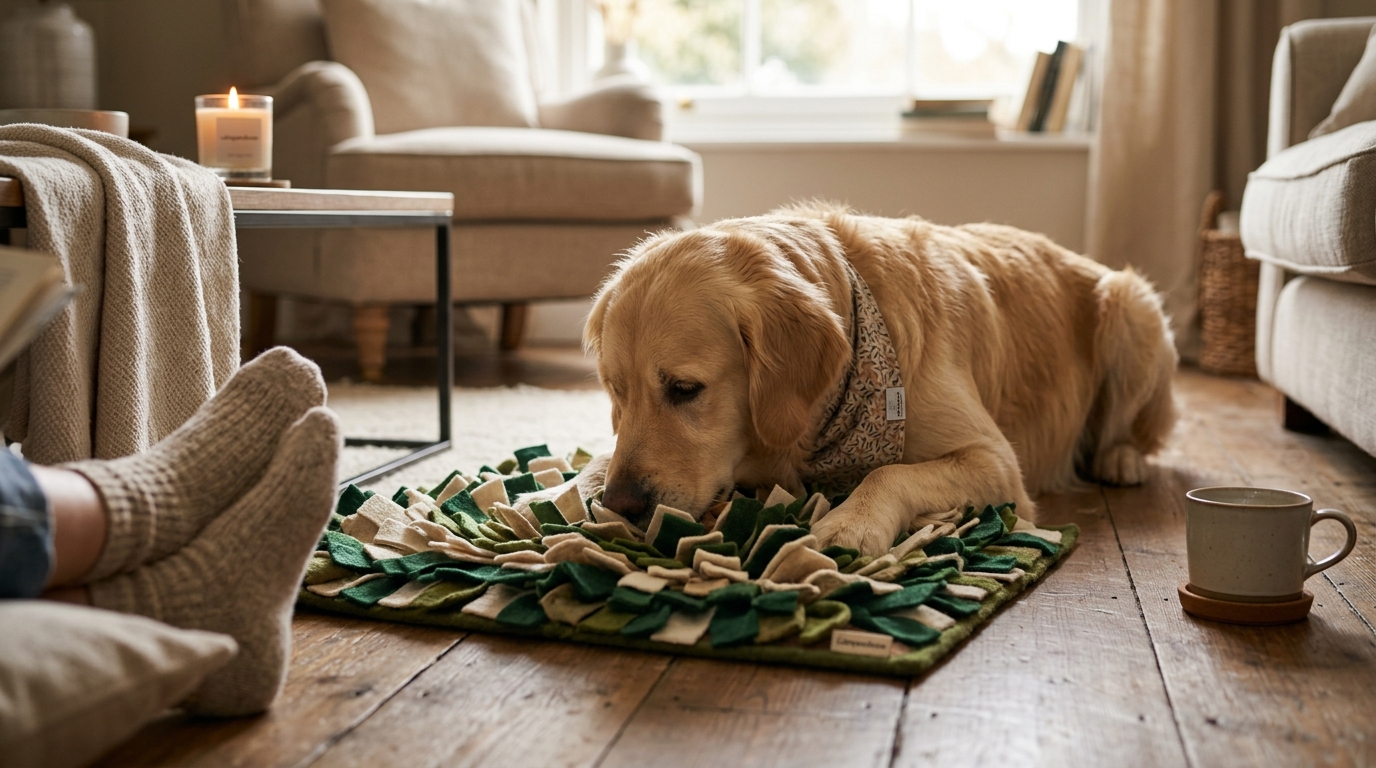
When a dog uses a snuffle mat, they are engaging in a simulated version of this ancestral behavior. The mat hides treats or kibble within layers of fabric, forcing the dog to use their nose to locate the reward. This nose work is a powerful cognitive exercise. It activates the brain's reward centers in a way that simple bowl feeding does not. By satisfying this deep-seated instinct, the dog experiences a sense of accomplishment and satisfaction. For additional details, review the Collections calmpaws home.
The Cognitive Load of Nose Work
Nose work is not just about smelling; it is about processing. A dog must distinguish the scent of food from the background smells of the mat. This requires a specific type of mental focus that is calming. When a dog is focused on a scent, their heart rate and breathing patterns often stabilize. This state of focused calm is different from the high-arousal excitement of fetch or tug-of-war. It is a low-arousal, high-focus state that helps the dog settle.
For dogs who feel overwhelmed by their environment, this focused task provides a mental anchor. It gives them a job to do. The act of finding the food becomes the primary objective, distracting them from external stressors. This is why foraging is a cornerstone of enrichment for anxious dogs. It bridges the gap between their wild instincts and their modern home life.
Sensory Enrichment and Focus
Sensory enrichment is the practice of stimulating a dog's senses to provide mental and physical benefits. A snuffle mat primarily targets the sense of smell, which is the most powerful sense for a dog. A dog's olfactory system is far more developed than a human's. They can detect scents at concentrations thousands of times lower than we can. This makes scent-based activities incredibly engaging for them.
When a dog is actively sniffing, they are processing a vast amount of information. This cognitive load can be tiring in a good way. It is similar to how a human might feel relaxed after a complex puzzle or a focused work task. The dog is not just burning calories; they are burning mental energy. This mental fatigue contributes to a calmer demeanor after the activity is complete.
The Role of Texture and Touch
While smell is the primary driver, touch also plays a role. The varied textures of a snuffle mat, such as soft fleece, rope, or ribbons, provide tactile stimulation. Dogs often use their paws to manipulate the fabric while searching. This physical interaction adds another layer of engagement. It keeps the dog's body active without requiring high-intensity exercise. This is particularly useful for dogs who are anxious but not necessarily hyperactive.
The combination of smell and touch creates a multi-sensory experience. This holistic engagement helps the dog feel more connected to their immediate environment. It turns a flat floor into a rich, interactive space. For CalmPaws & Home, this is the core philosophy behind our product design. We create mats that are not just functional, but also texturally interesting and safe for sensitive noses.
Slowing Down Mealtime
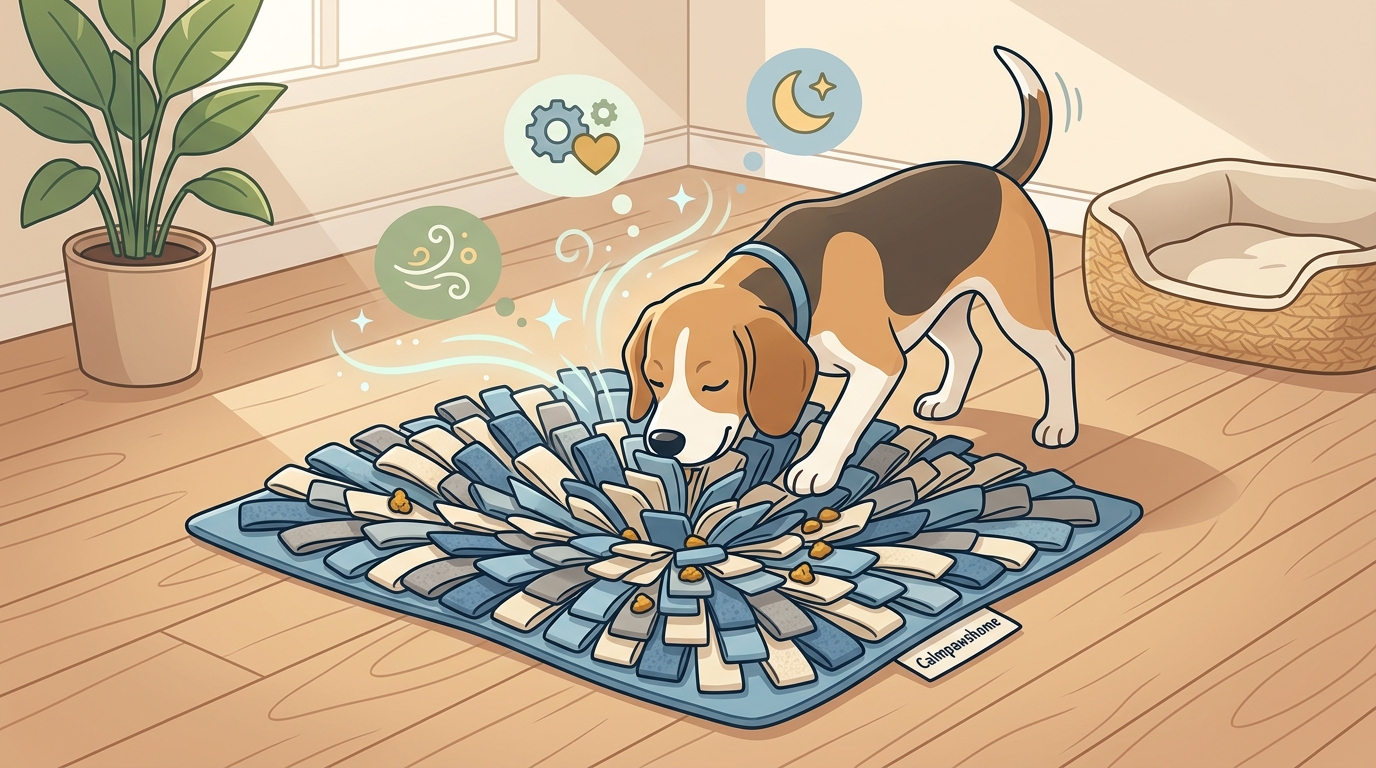
Many dogs eat too quickly, a behavior known as bolting. Bolting can lead to digestive issues, such as bloat or indigestion. More importantly for anxiety, it creates a cycle of rapid eating and rapid restlessness. The dog eats, feels unsettled, and then seeks more stimulation. A snuffle mat breaks this cycle by extending the duration of the meal.
By hiding food in the mat, you force the dog to eat at a slower pace. They must find one piece of food at a time. This pacing is naturally calming. It allows the dog to digest their food more effectively. It also provides a longer period of focused activity. Instead of a two-minute meal, the dog might spend ten to fifteen minutes working through the mat. This extended period of calm focus is a significant benefit for anxious dogs.
Reducing Mealtime Stress
For some dogs, mealtime is a source of stress. They may feel anxious about competition, or they may simply be too excited to eat properly. A snuffle mat can reduce this stress by making the meal a solitary, focused task. The dog is not rushing; they are exploring. This shift in mindset can transform mealtime from a stressful event into a relaxing routine. It gives the dog a sense of control over their food intake.
Consistency is key here. Using the mat for every meal helps establish a predictable routine. Predictability is a major factor in reducing dog anxiety. When dogs know what to expect, they feel safer. The snuffle mat becomes a reliable part of their daily structure. It is a tool that supports their emotional well-being through routine and pacing.
Choosing the Right Mat
Not all snuffle mats are created equal. The right choice depends on your dog's size, anxiety level, and preferences. Some mats are simple, with a few pockets. Others are complex, with multiple layers and textures. For a dog who is new to the concept, a simpler mat is often better. It is less overwhelming and easier to master. As the dog becomes more confident, you can introduce more complex designs.
Material safety is also a critical factor. You want a mat that is durable and free from harmful chemicals. Look for mats made from natural, non-toxic fabrics. The construction should be sturdy enough to withstand chewing and pulling. A well-made mat will last for months or even years. This durability ensures that the tool remains a reliable part of your dog's routine.
Comparison of Mat Types
| Mat Type | Complexity | Best For | Engagement Level |
|---|---|---|---|
| Simple Pocket Mat | Low | Puppies, Senior Dogs, Anxious Beginners | Moderate |
| Flower Design Mat | Medium | Adult Dogs, Moderate Anxiety | High |
| Multi-Layer Mat | High | High-Energy Dogs, Advanced Problem Solvers | Very High |
At CalmPaws & Home, we offer a range of designs, including our popular Flower Snuffle Mat. This design balances complexity and accessibility. It features soft, durable fabric petals that encourage natural foraging. The non-slip base ensures the mat stays in place, which is important for safety and stability. The machine-washable design makes it easy to keep clean, which is essential for hygiene.
Introduction and Training
Introducing a snuffle mat to an anxious dog requires patience. Do not simply throw the mat on the floor and expect the dog to figure it out immediately. Start by placing a few treats on top of the mat. Let the dog sniff and eat them. This builds positive associations with the new object. Once the dog is comfortable with the mat, you can start hiding treats in the pockets.
Keep the initial sessions short. Five to ten minutes is often enough. You want the dog to end the session feeling successful, not frustrated. If the dog becomes overwhelmed, stop the session and try again later. Positive reinforcement is key. Praise your dog when they find a treat. This reinforces the behavior and builds confidence. Over time, the dog will learn that the mat is a source of good things.
Building a Routine
Consistency is the most important factor in training. Use the mat at the same time each day. This helps the dog predict when the activity will happen. A predictable routine reduces anxiety. The dog knows that the mat is coming, and they can look forward to it. This anticipation can be a positive part of their day. It gives them something to look forward to, which is a powerful tool for emotional well-being.
Key Takeaways
- Snuffle mats engage a dog's natural foraging instincts, providing a calming cognitive exercise.
- Nose work is a low-arousal, high-focus activity that helps dogs settle their minds.
- Slowing down mealtime with a mat can reduce digestive issues and mealtime stress.
- Choose a mat that matches your dog's size and anxiety level; start simple and progress gradually.
- Material safety and durability are critical; look for non-toxic, sturdy fabrics.
- Introduce the mat slowly with positive reinforcement to build confidence.
- Consistency and routine are key to making the mat a reliable part of your dog's daily life.
- Snuffle mats are a comfort and enrichment tool, not a medical treatment for anxiety.
Frequently Asked Questions
How long should I let my dog use a snuffle mat?
Start with short sessions of 5 to 10 minutes. You can gradually increase the duration as your dog becomes more comfortable. Most dogs will naturally stop when they have found all the food or become tired. Watch for signs of frustration or exhaustion, and end the session if you see them.
Can I use a snuffle mat for every meal?
Yes, many owners use snuffle mats for every meal. This is an excellent way to slow down eating and provide daily enrichment. However, you can also use it for snacks or as a reward. The key is consistency. If you use it for every meal, make sure the dog is comfortable with it.
What if my dog is too anxious to use the mat?
Start by placing treats on top of the mat. Let the dog sniff and eat them without any pressure. Once they are comfortable, you can start hiding treats in the pockets. Be patient and go at your dog's pace. If the dog is extremely anxious, consult your veterinarian for additional support.
Are snuffle mats safe for all dogs?
Generally, yes, but you should supervise your dog during use. Ensure the mat is made from safe, non-toxic materials. Check for any loose threads or parts that could be chewed off. If your dog has a history of destructive chewing, choose a more durable mat.
How do I clean a snuffle mat?
Most snuffle mats are machine washable. Check the care instructions for your specific mat. Wash it regularly to keep it clean and hygienic. Air dry it completely before using it again. This prevents mold and mildew from developing in the fabric.
Do snuffle mats work for senior dogs?
Yes, snuffle mats are excellent for senior dogs. They provide mental stimulation without requiring physical exertion. This is important for older dogs who may have joint issues. The low-impact nature of nose work makes it a safe and beneficial activity for seniors.