Slow feeding tools are devices that extend the time a dog spends eating by adding physical or cognitive barriers to food access. CalmPaws & Home provides these enrichment solutions to help owners manage eating speed and provide mental stimulation. This guide covers snuffle mats and interactive feeding enrichment, explaining how each works and how to choose the right tool for your dog's specific needs. For additional details, review the calmpawshome com.
Snuffle Mats
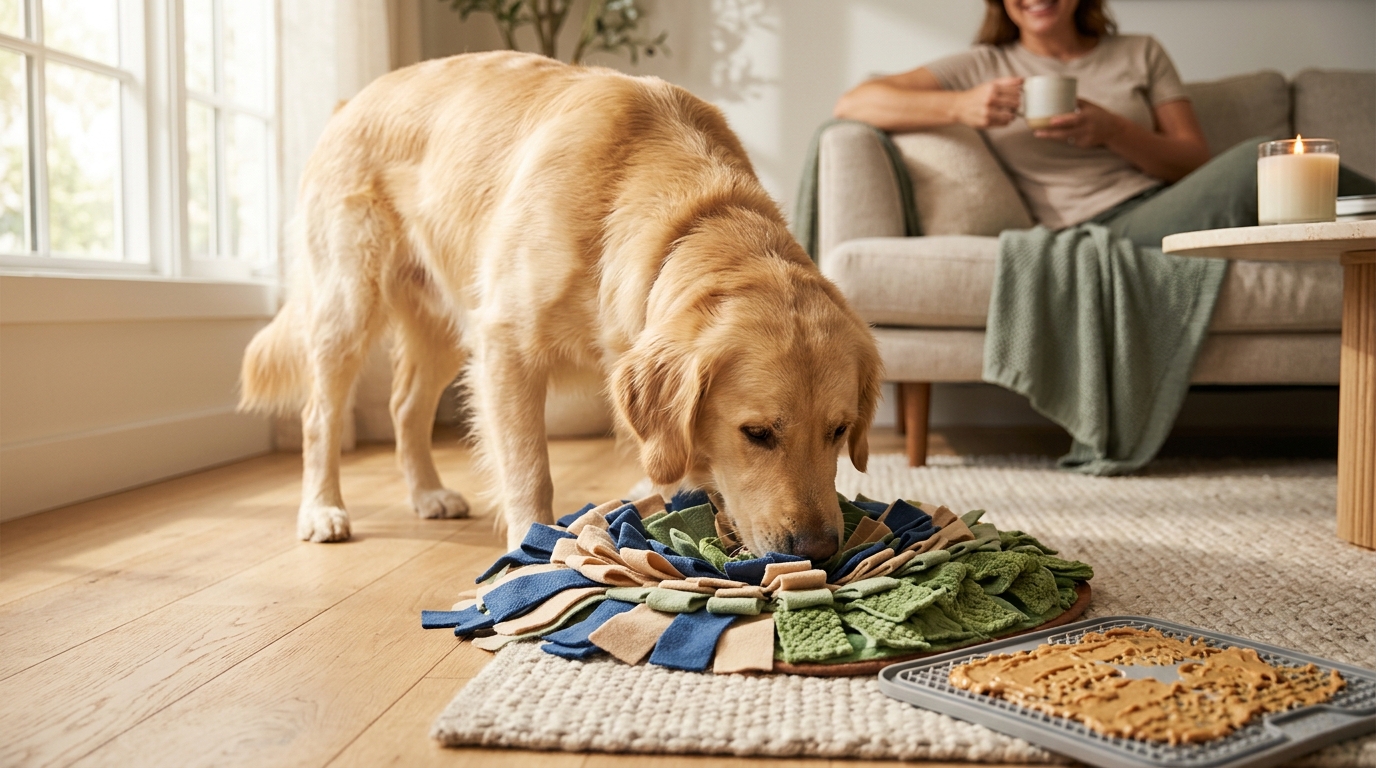
Snuffle mats are fabric-based enrichment tools that hide kibble or treats within layers of fleece, rope, or felt. A snuffle mat is a tactile puzzle that encourages dogs to use their nose and paws to locate food. This activity mimics natural foraging behaviors, which can help slow down eating while providing sensory engagement. At CalmPaws & Home, we design snuffle mats with durable materials to withstand enthusiastic digging and chewing. For additional details, review the .
How Snuffle Mats Work
The primary mechanism of a snuffle mat is the physical barrier created by the fabric layers. Dogs must sniff out the scent of food and then physically move the fabric to retrieve the kibble. This process naturally slows the rate of consumption compared to eating from a standard bowl. The tactile nature of the mat also provides a calming effect for many dogs, as the repetitive motion of digging and sniffing is soothing. For additional details, review the Customer Experience.
Choosing the Right Size and Material
Interactive Feeding Enrichment
Lick Mats and Silicone Mats
Puzzle Feeders and Slow Feeder Bowls
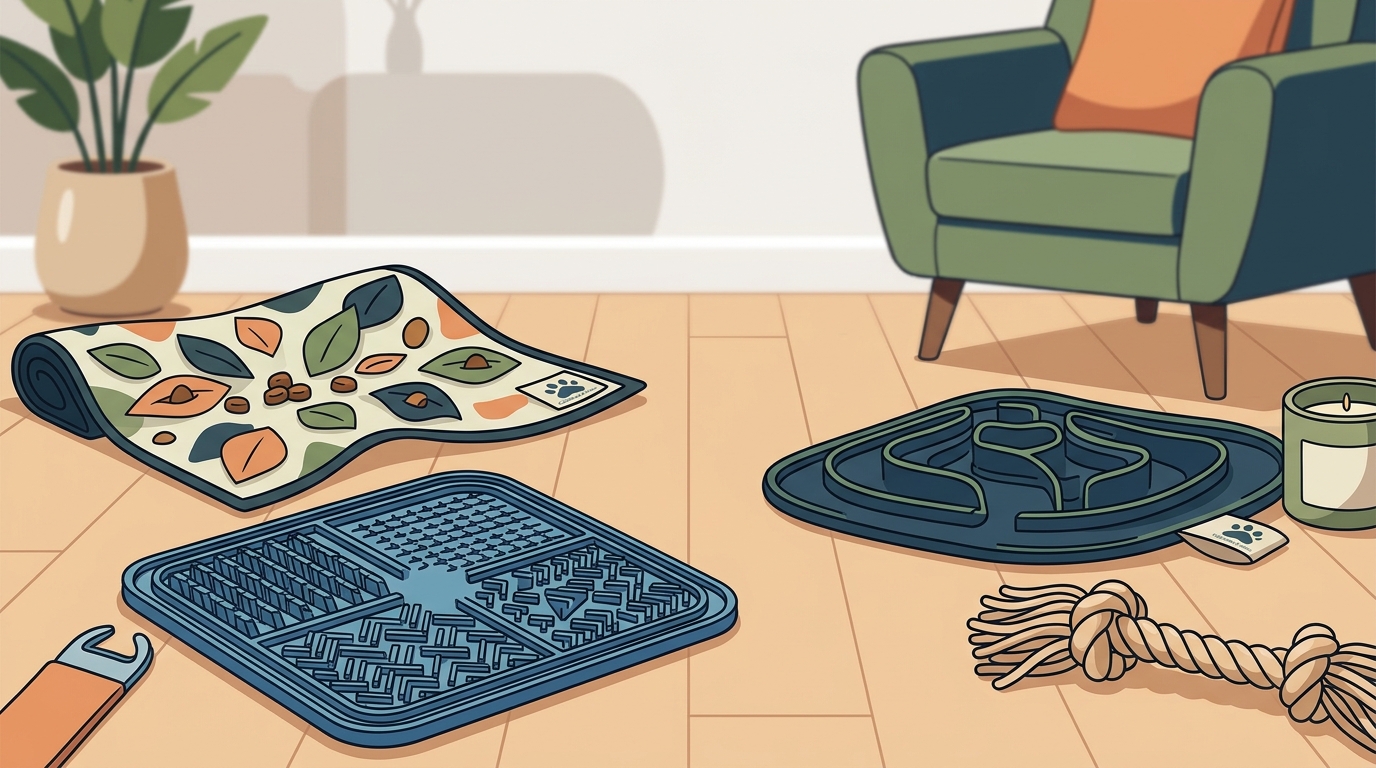
Puzzle feeders are plastic or rubber devices with compartments, flaps, or holes that dogs must manipulate to release food. A slow feeder bowl is a bowl with raised patterns or obstacles that prevent dogs from gulping food. These tools are effective for dogs that eat too fast, as they force the dog to work for each piece of kibble. The design of these tools varies widely, with some requiring simple paw movements and others requiring more complex problem-solving. For additional details, review the Frequently Asked Questions.
Comparison of Tools
| Tool Type | Best For | Cleaning Difficulty | Engagement Level |
|---|---|---|---|
| Snuffle Mat | Foraging and sniffing | Medium (Machine washable) | High (Tactile and olfactory) |
| Lick Mat | Soft foods and calming | Low (Dishwasher safe) | Medium (Licking focus) |
| Slow Feeder Bowl | Fast eaters | Low (Dishwasher safe) | Low (Physical barrier) |
| Puzzle Feeder | Cognitive stimulation | Medium (Hand wash or dishwasher) | High (Problem-solving) |
Key Takeaways
- Slow feeding tools extend eating time by adding physical or cognitive barriers. For additional details, review the About.
- Snuffle mats encourage natural foraging behaviors through tactile and olfactory engagement.
- Lick mats are ideal for soft foods and can provide a calming effect through licking.
- Slow feeder bowls are the simplest solution for dogs that gulp food.
- Choose materials that are durable and easy to clean to ensure longevity and hygiene.
- Introduce new tools gradually to allow your dog to adjust to the new feeding method.
Frequently Asked Questions
What is the best slow feeding tool for a fast eater?
A slow feeder bowl is often the best starting point for fast eaters. It provides a physical barrier that prevents gulping without requiring complex problem-solving. If your dog masters the bowl, you can progress to a puzzle feeder for added challenge.
Are snuffle mats safe for all dogs?
Snuffle mats are generally safe, but you should supervise your dog during use. Ensure the mat is made from durable, non-toxic materials and check for any loose threads or parts that could be chewed off. CalmPaws & Home designs mats with safety in mind, using sturdy fabrics and secure stitching.
How do I clean a snuffle mat?
Most snuffle mats are machine washable. Remove any visible food particles before washing, then place the mat in the washing machine on a gentle cycle. Air drying is recommended to preserve the fabric's texture and durability.
Can I use a lick mat with dry kibble?
How often should I replace my slow feeding tools?
Replace tools when they show signs of wear, such as tears, cracks, or loose parts. Regular inspection helps ensure safety and hygiene. Silicone and plastic tools may last longer than fabric mats, but all tools should be replaced if they become damaged.
Do slow feeding tools help with anxiety?
While slow feeding tools are not a substitute for veterinary advice, many owners report that the focused activity of licking or foraging can be calming for their dogs. The repetitive motion and mental engagement can help reduce restlessness during mealtime.