Modern pet ownership often defaults to a high-velocity rhythm. We rush through morning walks, skip mental enrichment, and fill every quiet moment with noise. This constant motion creates a baseline of anxiety for many dogs. Slow living for dogs is not about laziness. It is a deliberate practice of reducing sensory overload and prioritizing deep relaxation. Research indicates that dogs who experience regular periods of low-stimulation rest show significantly lower cortisol levels. This guide explores how to implement this philosophy in your home using thoughtful design and intentional routines.
Understanding Slow Living for Dogs
Slow living is a lifestyle choice that values mindfulness over efficiency. For dogs, this translates to fewer abrupt changes and more predictable interactions. A dog that lives in a fast-paced environment often struggles to switch off. They remain in a state of hyper-vigilance. This state drains their energy reserves and can lead to behavioral issues like leash reactivity or separation anxiety.
The concept of canine decompression is central to this approach. It involves giving your dog permission to be bored. Boredom allows the brain to process daily experiences. It also gives the nervous system time to reset. When you slow down, you give your dog the gift of presence. You stop rushing to the next task and start noticing their subtle signals.
This philosophy aligns with the mission of CalmPaws & Home, which focuses on creating comfort pieces for dogs and their owners. The goal is to build a home environment that supports this slower pace. It is about quality of time, not quantity of activity. A twenty-minute sniff walk can be more fulfilling than an hour of brisk exercise. This shift in perspective changes how we view our daily routines.
Creating Environmental Cues for Calm
Your home environment acts as a constant signal to your dog. Clutter, loud noises, and chaotic movement create visual and auditory stress. Slow living requires you to curate spaces that invite rest. This does not mean a sterile home. It means a home with clear zones for activity and clear zones for rest.
Designated Rest Zones
Every dog needs a safe haven. This could be a specific corner of the living room or a quiet bedroom. The key is consistency. Your dog should know that this space is theirs. When they retreat there, they are not disturbed. This autonomy helps them self-regulate. You can enhance this space with soft textiles and familiar scents.
Visual Barriers
Open floor plans are great for humans but can be overwhelming for dogs. Visual barriers help reduce stimulation. A simple room divider or a strategically placed piece of furniture can block the view of high-traffic areas. This allows your dog to observe the household without being part of the chaos. It creates a sense of security. They can watch the world go by from a place of safety.
For more insights on creating a peaceful home, explore our Calm Living Journal. We regularly share tips on managing household dynamics and reducing stress for pets.
Sensory Tools for Decompression
Slow living is not just about doing less. It is about engaging with the present moment more deeply. Sensory tools help facilitate this engagement. They provide a focal point for your dog’s attention. This focus pulls them out of anxious thoughts and into the here and now.
The Power of Scent
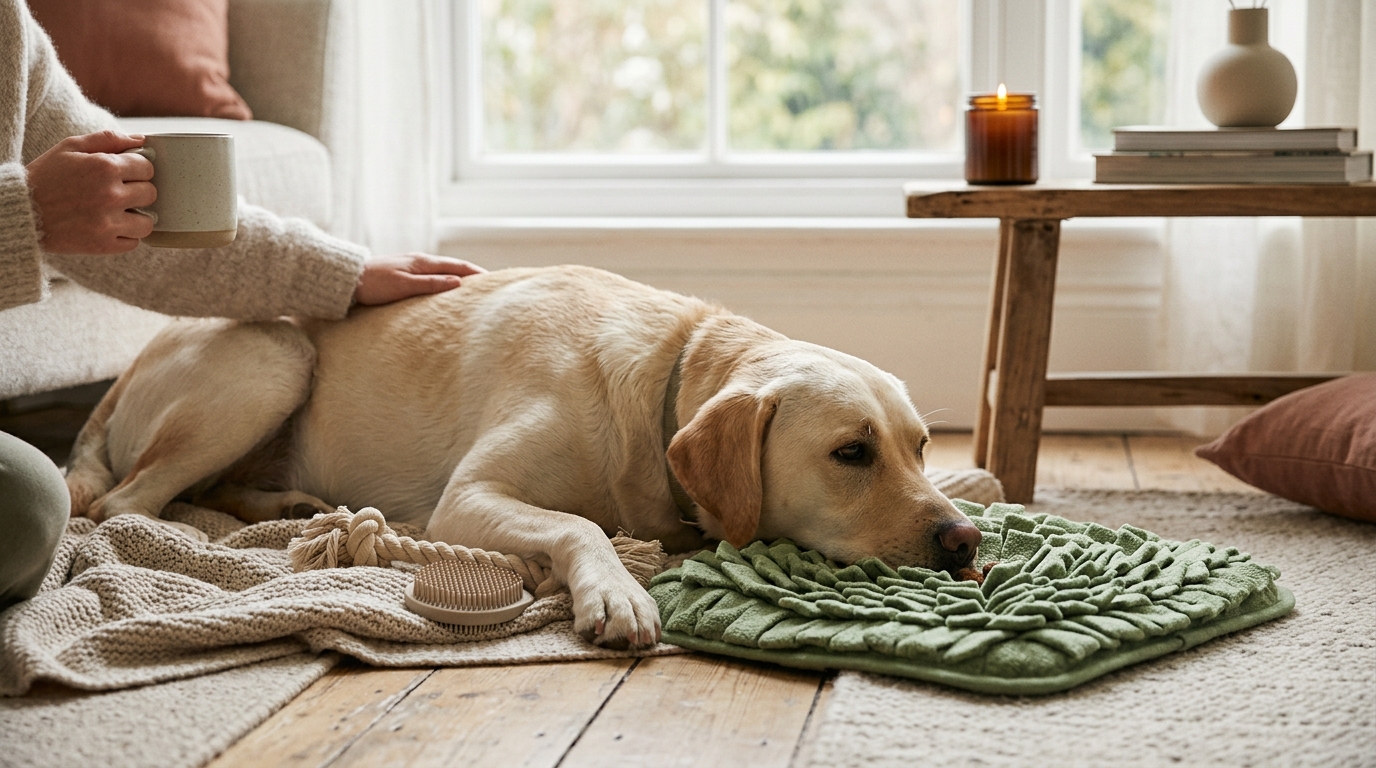
A dog’s sense of smell is their primary window to the world. Scent-based enrichment is a cornerstone of slow living. Sniffing activates the parasympathetic nervous system. It naturally lowers heart rate and promotes relaxation. A snuffle mat encourages your dog to use their nose to find treats. This activity tires them out mentally in a gentle way.
The Calming Snuffle Mat is designed to make this process easy. It provides a textured surface that hides treats, encouraging natural foraging behavior. This simple tool can transform a chaotic afternoon into a period of focused calm.
Calming Scents for the Home
Aromatherapy can play a supportive role in a slow living home. Certain scents, like lavender and chamomile, are known for their soothing properties. These scents can help mask stressful noises like thunderstorms or fireworks. They create a subtle atmosphere of peace. However, it is crucial to use pet-safe products only.
Our Calming Soy Candle is formulated with gentle, natural ingredients. It helps set the tone for the evening. Lighting a candle during your wind-down routine signals to your dog that it is time to relax. It is a shared ritual that benefits both of you.
The Power of Routine Structure
Predictability is the foundation of canine confidence. A slow living routine is not rigid. It is flexible but consistent. It provides a framework that your dog can rely on. When they know what to expect, they feel safer.
Morning Rituals
Start the day slowly. Avoid rushing out the door immediately. Spend a few minutes connecting with your dog. A gentle brush or a quiet moment of petting sets a positive tone. It reinforces your bond before the day begins. This small investment of time pays off in behavioral stability throughout the day.
Evening Wind-Down
The evening is often the most chaotic time. Meals, baths, and bedtime routines can feel like a checklist. Slow living encourages you to merge these tasks. Instead of rushing, take your time. Speak in a lower, softer voice. Move with intention. This helps your dog transition from high energy to rest.
Consider the Full Calming Bundle for a comprehensive approach. It combines our favorite tools for evening relaxation. Having these items readily available makes it easier to maintain the routine. Consistency is key. Over time, your dog will learn to associate these cues with deep rest.
Essential Calm Products Comparison
Choosing the right tools can feel overwhelming. Each product serves a specific purpose in the slow living ecosystem. Understanding these differences helps you build a balanced toolkit. Below is a comparison of our core calming items.
| Product | Primary Function | Best For | Price Range |
|---|---|---|---|
| Snuffle Mat | Mental Enrichment | Indoor decompression | $16.99 |
| Calming Soy Candle | Ambient Scent | Home atmosphere | $12.99 |
| Cotton Rope Tug Toy | Gentle Play | Interactive bonding | $11.99 |
| Rope Toy with Treat Ball | Problem Solving | Focus training | $14.99 |
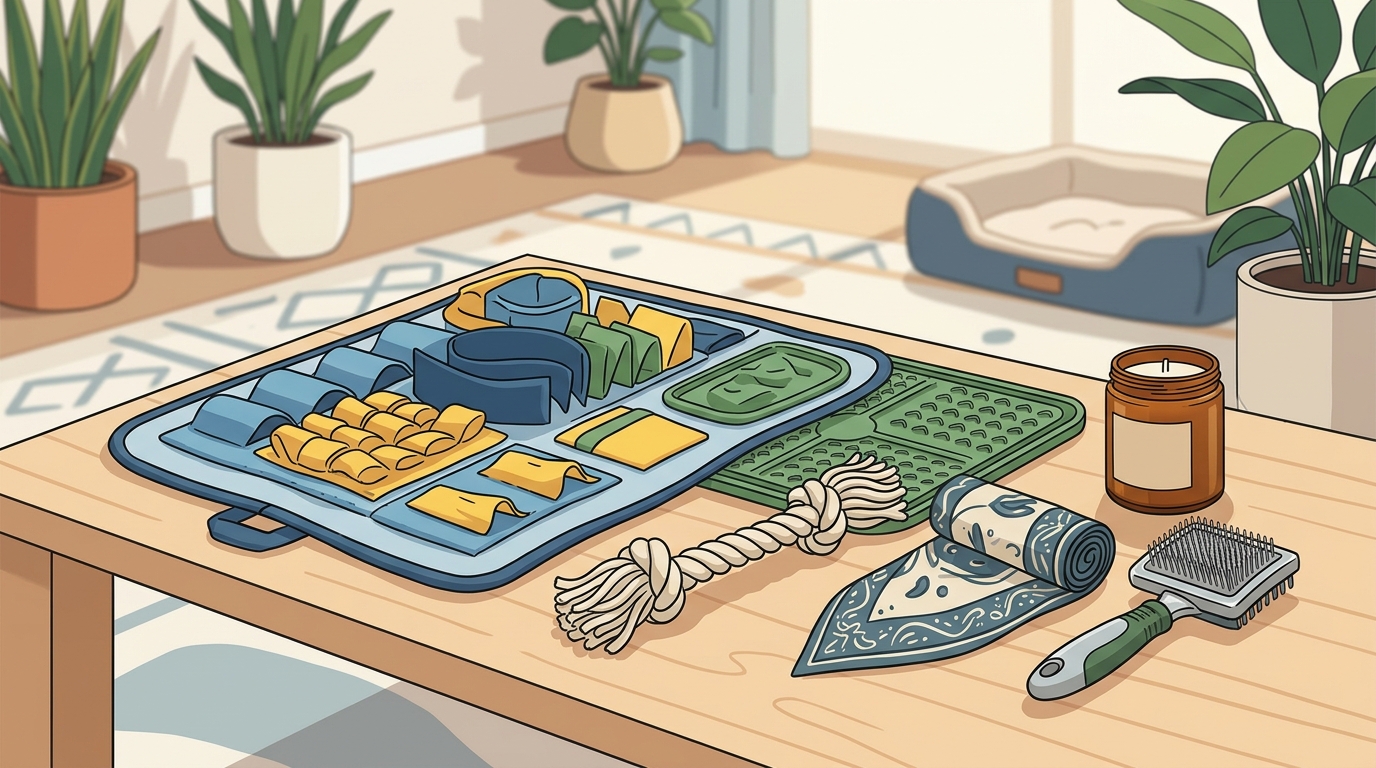
Each item is designed to support a different aspect of calm living. The snuffle mat engages the nose. The candle engages the sense of smell for the home. The toys engage the body and mind. Together, they create a holistic approach to relaxation.
Key Takeaways
- Slow living for dogs prioritizes mental rest over physical exhaustion.
- Designated rest zones help dogs self-regulate in busy households.
- Scent-based enrichment, like snuffle mats, naturally lowers canine stress.
- Predictable routines provide a sense of security and reduce anxiety.
- Calming candles create a shared wind-down ritual for owners and pets.
- Quality time is more valuable than quantity when building bonds.
- Consistent environmental cues signal safety to your dog.
Frequently Asked Questions
How does slow living reduce dog anxiety?
Slow living reduces anxiety by lowering the overall stimulation load. When dogs are not constantly reacting to noise or movement, their nervous system has time to reset. This prevents the buildup of chronic stress.
Can I use calming candles around my dog?
Yes, provided they are pet-safe. Our Calming Soy Candle uses natural ingredients that are gentle on pets. Always ensure your dog cannot knock the candle over.
What is the best way to introduce a snuffle mat?
Start with easy-to-find treats. Let your dog sniff around without pressure. Gradually hide the treats deeper into the mat as they become more confident. This builds their problem-solving skills.
How long should a slow morning routine be?
There is no fixed time. Even five minutes of intentional connection can make a difference. The goal is to be present, not to complete a task quickly.
Does slow living work for high-energy breeds?
Yes. High-energy breeds often need more mental stimulation than physical exercise. Slow living provides that mental outlet through enrichment activities like sniffing and foraging.
How do I create a rest zone in a small apartment?
Use a corner or a specific bed. Visual barriers like a screen or a plant can help define the space. Consistency is more important than size.
What is the difference between boredom and calm?
Boredom is a lack of stimulation. Calm is a state of relaxed awareness. Slow living aims for calm by providing meaningful, low-stress engagement.
Can I combine slow living with training?
Absolutely. Training is most effective when the dog is calm and focused. Slow living creates the ideal mental state for learning.
Start Your Calm Journey
Slow living is a practice, not a destination. It requires patience and intention. But the rewards are profound. You will notice a calmer dog and a more peaceful home. You will deepen your bond through shared moments of quiet. Start small. Choose one tool from our Shop Collection. Create one new routine. The journey to a calmer home begins with a single, slow step.