

Emergency veterinary care is one of the most unpredictable expenses for any pet owner. According to the American Veterinary Medical Association, the average cost of an emergency visit for a dog can exceed $1,000, while cats often require specialized care that drives costs even higher. This financial reality forces a critical decision: should you rely on a monthly insurance premium or build a dedicated emergency fund? At Calm Paws Home, we understand that there is no one-size-fits-all solution. This guide compares these two primary approaches to help you protect your pet and your wallet.
Understanding the Options
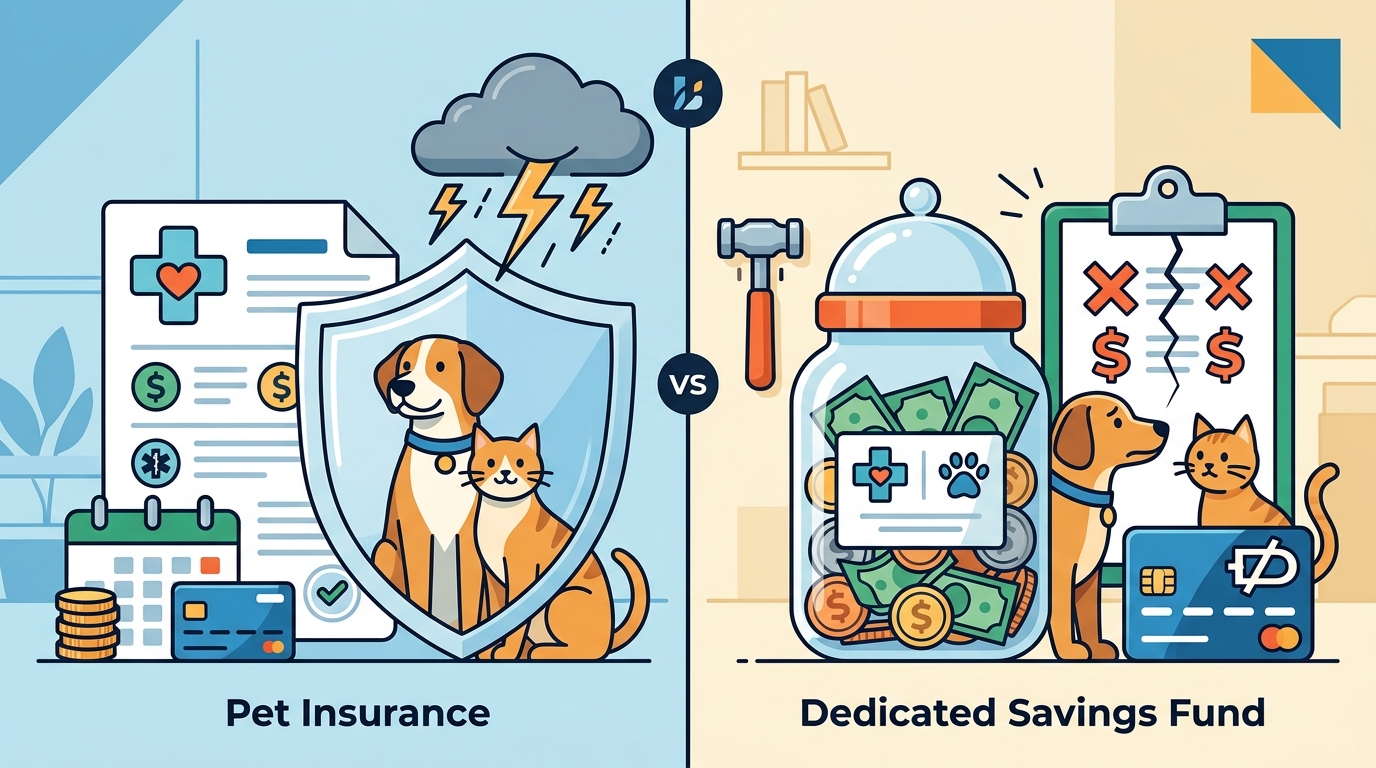
When it comes to managing the financial risks of pet ownership, two dominant strategies emerge. The first is traditional pet insurance, which operates similarly to human health insurance. You pay a monthly premium, and in exchange, the insurer covers a percentage of eligible veterinary costs after you meet a deductible. The second strategy is self-insuring through a high-yield savings account. In this model, you set aside a fixed amount each month into a dedicated account, using those funds only when your pet needs medical attention.
Both approaches have merit, but they serve different financial profiles and risk tolerances. Understanding the mechanics of each is the first step toward making an informed choice. For more insights on managing pet health costs, you can explore our pet health budgeting resources.
Pet Insurance Deep Dive
Pet insurance provides a safety net against catastrophic events. The primary benefit is immediate financial protection. If your dog breaks a leg or your cat develops a chronic condition like diabetes, the insurance company reimburses you for a significant portion of the bill. This prevents a single emergency from derailing your personal finances.
However, this protection comes with costs and complexities. Premiums vary based on your pet's breed, age, and location. For example, a Golden Retriever may cost more to insure than a mixed-breed dog due to higher predispositions for certain genetic conditions. Additionally, most policies include an annual deductible, a co-pay percentage, and a maximum payout limit. It is crucial to read the fine print to understand what is excluded, such as pre-existing conditions.
For a detailed breakdown of how reimbursement works, check out our guide on how pet insurance works. This resource clarifies the difference between accident-only plans and comprehensive coverage.
The Savings Account Strategy
Self-insuring through a savings account offers complete control over your funds. You decide how much to save each month, and you keep every dollar that goes unspent. This approach is particularly appealing for owners of healthy, young pets who are unlikely to need extensive medical care in the near future.
The flexibility of a savings account is its greatest strength. Unlike insurance, there are no claim forms, no network restrictions, and no pre-authorization requirements. You can use the funds for any veterinary expense, including routine care, dental cleanings, or elective procedures. Furthermore, if your pet remains healthy, the money you saved can be used for other purposes, such as boarding, grooming, or even a new pet.
However, this strategy requires discipline. If a major emergency strikes, you must have enough saved to cover the cost. If you have not saved adequately, you may face difficult choices about your pet's care. For tips on building a robust emergency fund, visit our financial planning for pets article.
Comparative Analysis
To help you decide, we have compiled a comparison of the key factors. This table highlights the differences in cost, coverage, and flexibility.
| Factor | Pet Insurance | Savings Account |
|---|---|---|
| Monthly Cost | Fixed premium ($20-$60+) | Flexible (you set the amount) |
| Coverage Limit | Annual maximum (e.g., $10,000) | Depends on savings balance |
| Pre-existing Conditions | Usually excluded | Covered if funds are available |
| Administrative Burden | High (claims, paperwork) | Low (automatic transfers) |
| Best For | High-risk breeds, older pets | Healthy young pets, disciplined savers |
Research from the American Veterinary Medical Association indicates that veterinary costs have risen by approximately 6% annually over the last decade. This inflation trend makes the cost of insurance premiums a relevant factor in your long-term planning. Conversely, a study by the Investopedia suggests that having three to six months of expenses saved is the standard for financial security, a principle that applies equally to pet ownership.
Key Takeaways
- Pet Insurance is a risk management tool that protects against high-cost, low-probability events.
- Savings Accounts offer flexibility and control but require consistent discipline to build an adequate buffer.
- Pre-existing conditions are typically excluded from insurance policies, making savings the only option for covering past health issues.
- Breed and Age are critical factors; older pets and high-risk breeds generally benefit more from insurance.
- Administrative Ease favors savings accounts, as there are no claims to file or approvals to seek.
- Cost Efficiency depends on your pet's health; if your pet rarely visits the vet, savings may be more cost-effective.
- Peace of Mind is subjective; some owners prefer the certainty of a premium, while others prefer the autonomy of self-insuring.
Frequently Asked Questions
Is pet insurance worth it for a young, healthy pet?
For young, healthy pets, pet insurance can be worth it if you want to lock in lower premiums before age-related issues arise. However, if you are disciplined enough to save the premium amount monthly, a savings account might be more cost-effective over time.
What happens if my pet has a pre-existing condition?
Most pet insurance policies exclude pre-existing conditions. This means any illness or injury that occurred before your policy start date will not be covered. In this case, a savings account is the only viable option for managing those specific costs.
How much should I save for my pet's emergency fund?
A common recommendation is to save enough to cover at least one major emergency, which can range from $2,000 to $5,000 depending on your location and the severity of the condition. Some experts suggest aiming for $10,000 for comprehensive coverage.
Can I use pet insurance for routine care?
Some comprehensive pet insurance plans offer optional wellness riders that cover routine care, such as vaccinations and annual check-ups. However, these riders often come with a higher premium and may have lower reimbursement rates.
What is the difference between an accident-only plan and comprehensive coverage?
Accident-only plans cover injuries resulting from accidents, such as broken bones or swallowed objects. Comprehensive coverage includes accidents plus illnesses, such as cancer, diabetes, and infections. Comprehensive coverage is generally more expensive but offers broader protection.
How do I choose the right deductible?
A higher deductible lowers your monthly premium but increases your out-of-pocket costs when you file a claim. Choose a deductible you can comfortably afford in an emergency. For more guidance, read our guide on choosing pet insurance deductibles.
Are there alternatives to traditional pet insurance?
Yes, some pet wellness plans and discount programs offer similar benefits without being traditional insurance. These programs often provide discounts on veterinary services rather than reimbursement. It is important to distinguish between these and true insurance policies.
Next Steps
Deciding between pet insurance and a savings account is a personal choice that depends on your financial situation and your pet's health profile. At Calm Paws Home, we are committed to helping you make the best decision for your family. If you are ready to explore insurance options or need help setting up a savings plan, contact our team today for personalized advice.